
 LMS
 Reels Series
Fire Waking Watch Services UK: Benefits, Costs & Guide
Introduction
Fire safety is a critical responsibility for residential building owners, commercial property managers, construction companies, and businesses across the United Kingdom. When fire alarm systems become unavailable, detection equipment fails, or buildings present additional fire risks, alternative safety arrangements may be necessary to protect occupants and property.
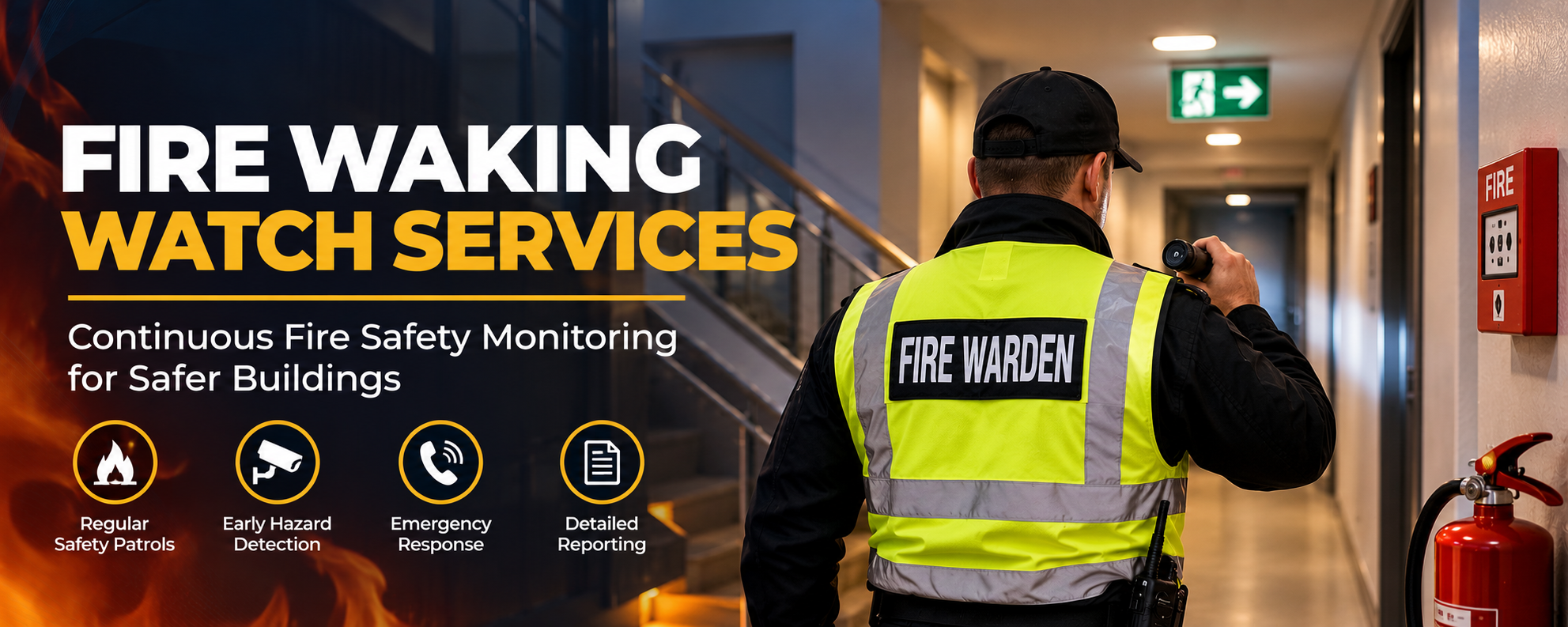
Professional Fire Waking Watch Services provide continuous human monitoring in buildings where existing fire safety measures are temporarily inadequate. Trained fire wardens conduct regular patrols, identify visible fire hazards, communicate emergencies, and support established evacuation procedures.
These services are particularly important in buildings experiencing temporary fire detection failures, refurbishment work, or unresolved fire safety concerns.
Intraguard provides professional fire waking watch services across the UK, offering trained personnel, structured monitoring, documented patrols, and emergency communication support.
This comprehensive guide explains how fire waking watch services work, when they may be necessary, their benefits, costs, and how property managers can choose suitable fire safety arrangements.
What Are Fire Waking Watch Services?
Fire Waking Watch Services involve deploying trained personnel to continuously monitor designated areas of a building for signs of fire or other immediate fire-related hazards.
Fire wardens conduct regular patrols according to an established fire safety plan, remaining alert to smoke, unusual smells, visible flames, and conditions that may indicate a developing incident.
Unlike automatic fire detection systems, waking watch relies on people identifying concerns and communicating appropriate warnings.
A waking watch may be implemented as a temporary risk reduction measure when normal fire protection arrangements are unavailable or insufficient.
For example, if a residential building experiences a significant fire alarm failure, the responsible person may need to consider temporary monitoring while arranging urgent repairs.
However, a waking watch is not automatically suitable for every building. Its use should follow a competent fire risk assessment, with the arrangements agreed by the relevant responsible parties.
When Are Fire Waking Watch Services Required?
Fire Alarm System Failures
Fire alarms play an essential role in providing early warning to building occupants.
When an important part of a fire detection or warning system fails, the building's existing fire safety arrangements may no longer provide adequate protection.
A competent assessment should determine whether temporary measures, including waking watch, are appropriate while the equipment is repaired.
Buildings With Fire Safety Deficiencies
Some buildings may have significant fire safety concerns that require temporary protective measures pending permanent remediation.
The suitability of a waking watch depends on the identified risks, existing precautions, and building-specific evacuation strategy.
Construction and Renovation Projects
Construction and refurbishment activities can introduce additional hazards through temporary electrical installations, hot works, combustible materials, and changes to escape routes.
Certain projects may require dedicated fire monitoring during defined activities or periods when normal detection equipment is affected.
Residential Buildings Undergoing Remediation
Multi-occupied residential buildings with serious fire safety deficiencies may require interim arrangements while longer-term improvements are completed.
A waking watch can form part of those measures when recommended through an appropriate assessment.
Permanent risk reduction should remain the objective rather than allowing temporary arrangements to continue unnecessarily.
How Do Professional Fire Waking Watch Services Work?
Initial Fire Safety Assessment
Before a waking watch begins, the responsible person should establish why additional fire monitoring is needed.
A competent assessment considers the building layout, occupancy, existing fire protection, escape routes, and identified deficiencies.
The findings help determine whether a waking watch is appropriate and how it should operate.
Continuous Fire Safety Patrols
Trained fire wardens patrol designated areas according to an agreed monitoring schedule.
Personnel remain alert to visible smoke, unusual smells, signs of overheating, and other relevant fire hazards.
Coverage arrangements should ensure that monitoring remains effective throughout the required period, including during staff breaks and shift changes.
Fire Hazard Identification
Waking watch personnel may identify obstructed escape routes, damaged fire doors, unsafe storage conditions, or other visible concerns encountered during patrols.
The role is to recognise and report problems within their training and responsibilities.
Specialist inspections, repairs, and technical assessments must still be undertaken by appropriately qualified professionals.
Emergency Communication
If a fire is discovered, personnel follow the building's emergency procedures.
This includes raising the alarm, contacting emergency services, communicating with designated supervisors, and supporting the applicable evacuation strategy.
Waking watch personnel should not enter dangerous conditions or undertake firefighting beyond their competence and training.
Fire Safety Documentation
Professional waking watch services maintain records of patrol activity, incidents, observations, and relevant communications.
These documents help responsible persons monitor temporary arrangements and review whether the measures remain suitable.
Benefits of Fire Waking Watch Services
Early Identification of Fire Hazards
Regular monitoring can help identify visible signs of developing fires or unsafe conditions.
When automatic systems are unavailable, trained personnel provide an additional means of detecting concerns and communicating warnings.
However, human monitoring has limitations and should not be treated as equivalent to a properly functioning automatic detection system.
Improved Emergency Preparedness
Clearly defined duties help personnel understand what action to take when an incident occurs.
Familiarity with escape routes, emergency contacts, and building procedures supports a more organised response.
Additional Protection for Occupants
Buildings with temporary fire safety deficiencies may require extra precautions to reduce risks to residents, employees, and visitors.
Appropriately designed waking watch arrangements can provide an additional layer of protection while permanent improvements are underway.
Support for Building Management
Property managers benefit from having designated personnel responsible for agreed monitoring activities.
Regular records and communication can improve oversight of fire safety concerns during high-risk periods.
Support for Temporary Fire Safety Arrangements
A waking watch can help responsible persons implement interim measures recommended through a competent assessment.
It does not, however, replace the underlying legal duty to provide adequate fire precautions or complete necessary remedial work.
Which Properties May Need Fire Waking Watch Services?
Residential Apartment Buildings
Multi-occupied residential buildings may need interim fire monitoring when significant defects affect existing fire safety measures.
Personnel must understand the building's specific evacuation strategy and communication procedures.
Commercial Office Buildings
Office buildings experiencing major fire alarm disruptions may require temporary monitoring arrangements.
The necessary measures depend on occupancy, building layout, available detection systems, and the outcome of the fire risk assessment.
Hotels and Hospitality Properties
Hotels and hospitality venues accommodate guests who may be unfamiliar with the building.
Where temporary monitoring is appropriate, personnel must understand emergency procedures and how warnings will be communicated to occupants.
Construction Sites
Construction projects may require fire monitoring during particular operations or periods of elevated fire risk.
These arrangements can support site-specific fire safety controls, especially when ordinary detection or protection measures are affected.
Healthcare and Care Facilities
Healthcare environments may contain occupants who need assistance during emergencies.
Any waking watch arrangement must account for individual evacuation needs, staffing arrangements, and the facility's established fire safety strategy.
Specialist assessment and coordination are essential in these environments.
Fire Waking Watch vs. Fire Alarm Systems
Fire waking watch and automatic fire alarm systems serve related but different purposes.
Fire Waking Watch
A waking watch relies on trained personnel to conduct patrols, identify warning signs, and initiate emergency procedures.
Its effectiveness depends on staffing, coverage, training, communication, and building conditions.
Automatic Fire Detection Systems
Automatic systems use detectors and connected equipment to identify specified fire-related conditions and activate warnings.
Properly designed and maintained systems can provide monitoring without depending on a person physically observing each location.
Which Option Is Better?
A suitable permanent fire detection and warning system will generally provide a more sustainable solution where one is required by the building's fire strategy.
A waking watch should normally be considered a temporary measure, rather than a permanent substitute for necessary fire safety improvements.
The correct arrangement must be determined through professional fire safety assessment.
How Much Do Fire Waking Watch Services Cost in the UK?
The cost of Fire Waking Watch Services in the UK depends on the building, staffing requirements, monitoring duration, and level of risk.
Unlike a fixed equipment purchase, waking watch typically involves continuous staffing expenses throughout the period of deployment.
Building Size and Layout
Larger buildings or those with complex layouts may require additional personnel to maintain suitable monitoring coverage.
The number of floors, separate blocks, access routes, and monitoring areas can influence staffing requirements.
Number of Fire Wardens
The required number of fire wardens should be determined by a competent assessment rather than a fixed staffing formula.
Factors include building configuration, occupancy, patrol routes, and the speed at which personnel must communicate warnings.
Duration of Service
A short-term alarm outage may require monitoring for a limited period.
Longer remediation projects may involve substantially greater costs because services continue across multiple shifts and days.
Location and Operational Requirements
Property location, personnel availability, supervisory requirements, and emergency communication arrangements may also affect pricing.
Reducing Long-Term Waking Watch Costs
Although waking watch may provide necessary interim protection, prolonged deployment can become expensive.
Property owners should prioritise suitable permanent repairs and investigate appropriate technical alternatives with competent fire safety professionals.
The objective should be to resolve the underlying fire safety problem rather than indefinitely maintain temporary monitoring.
Fire Waking Watch and UK Fire Safety Regulations
Fire safety responsibilities in England and Wales are governed by legislation, including the Regulatory Reform (Fire Safety) Order 2005, with related requirements applying in particular building circumstances.
Scotland and Northern Ireland have their own fire safety frameworks.
The relevant responsible person must ensure that appropriate fire precautions are established and maintained.
A waking watch is not automatically required whenever a fire alarm fails. The appropriate action depends on the seriousness of the failure and the results of a competent risk assessment.
For residential buildings, relevant guidance on interim fire safety arrangements should also be considered.
Building managers should consult qualified fire safety professionals and relevant authorities where necessary.
Professional waking watch personnel must receive suitable training and instructions for their assigned responsibilities.
What Qualifications Should Fire Waking Watch Personnel Have?
Fire waking watch personnel need suitable fire safety training to identify hazards and respond appropriately.
Fire Hazard Awareness
Personnel should understand common fire hazards, recognise warning signs, and know when concerns require immediate escalation.
Emergency Evacuation Procedures
Fire wardens must understand the evacuation strategy applicable to the building.
Different premises may require different procedures, making building-specific training essential.
Effective Communication
Personnel should be able to communicate clearly with occupants, supervisors, and emergency services.
Reliable communication equipment and agreed escalation procedures are important.
Documentation and Reporting
Accurate patrol logs and incident reports help responsible persons maintain oversight of temporary fire safety arrangements.
Security industry licensing and fire safety competence are separate considerations. An SIA licence alone does not demonstrate that an individual has received suitable waking watch training.
Why Choose Intraguard for Fire Waking Watch Services?
Intraguard provides professional fire waking watch support for residential, commercial, and other properties requiring temporary fire safety monitoring.
The company's service includes trained fire monitoring personnel, structured patrol schedules, hazard observation, incident reporting, and emergency communication support.
Its approach focuses on maintaining vigilance during periods when normal fire protection arrangements are compromised.
Depending on the building's requirements, waking watch personnel can work alongside property managers, facilities teams, and responsible persons to follow established fire safety instructions.
Businesses should confirm the proposed staffing levels, training, monitoring procedures, service availability, and reporting arrangements before deployment.
Professional coordination helps ensure that temporary monitoring supports the wider fire safety strategy.
Frequently Asked Questions About Fire Waking Watch Services
What is a fire waking watch?
A fire waking watch is a temporary fire safety arrangement involving trained personnel who continuously monitor designated building areas for signs of fire and follow agreed emergency procedures.
When is a fire waking watch necessary?
A waking watch may be appropriate when significant fire safety deficiencies or system failures create risks that require interim monitoring. Its necessity should be established through a competent assessment.
Is a fire waking watch legally required in the UK?
There is no universal requirement for every building to have a waking watch. Responsible persons must implement suitable fire precautions, which may include waking watch where justified by the circumstances and applicable requirements.
How much does a fire waking watch cost?
Costs depend on building size, staffing levels, service duration, location, and monitoring requirements. A detailed quotation based on the assessed fire safety plan is the most reliable approach.
Can a waking watch replace a fire alarm system?
A waking watch may provide temporary risk reduction when fire detection or warning arrangements are inadequate, but it should not normally replace a necessary permanent fire alarm system.
Do fire waking watch personnel work overnight?
Yes, waking watch arrangements may require overnight or continuous monitoring, depending on the building's fire safety needs and agreed deployment plan.
What happens if a fire is discovered?
Personnel follow the emergency plan, raise the alarm, contact emergency services, and support the applicable evacuation procedures within their training and responsibilities.
Are waking watch services suitable for residential buildings?
Yes, they may be suitable for residential buildings experiencing serious fire safety deficiencies, provided a competent assessment confirms that the proposed arrangements are appropriate.
How long should a waking watch remain in place?
A waking watch should remain only for as long as it is necessary under the building's assessed interim fire safety arrangements. Permanent remediation should be pursued promptly.
What equipment do waking watch fire wardens use?
Depending on the assignment, personnel may use communication devices, patrol recording systems, flashlights, emergency contact information, and relevant fire safety documentation.
Conclusion
Professional Fire Waking Watch Services in the UK provide an important temporary safety measure for buildings experiencing fire detection failures or other significant fire protection concerns.
Through trained personnel, continuous monitoring, structured patrols, emergency communication, and detailed reporting, waking watch arrangements can help responsible persons manage fire risks while necessary repairs or improvements are completed.
These services may be appropriate for residential buildings, commercial offices, hospitality properties, construction sites, and other facilities where competent assessments identify a need for interim monitoring.
Intraguard provides fire waking watch services designed to support building managers and responsible persons during periods of elevated fire risk.
However, temporary monitoring should never be viewed as a permanent replacement for effective fire detection systems, appropriate building safety measures, and necessary remediation.
Ultimately, successful fire safety management depends on identifying hazards early, maintaining appropriate precautions, following established emergency procedures, and ensuring that permanent solutions are implemented without unnecessary delay.

 English
 Arabic
 French
 Spanish
 Portuguese
 Deutsch
 Turkish
 Dutch
 Italiano
 Russian
 Romaian
 Portuguese (Brazil)