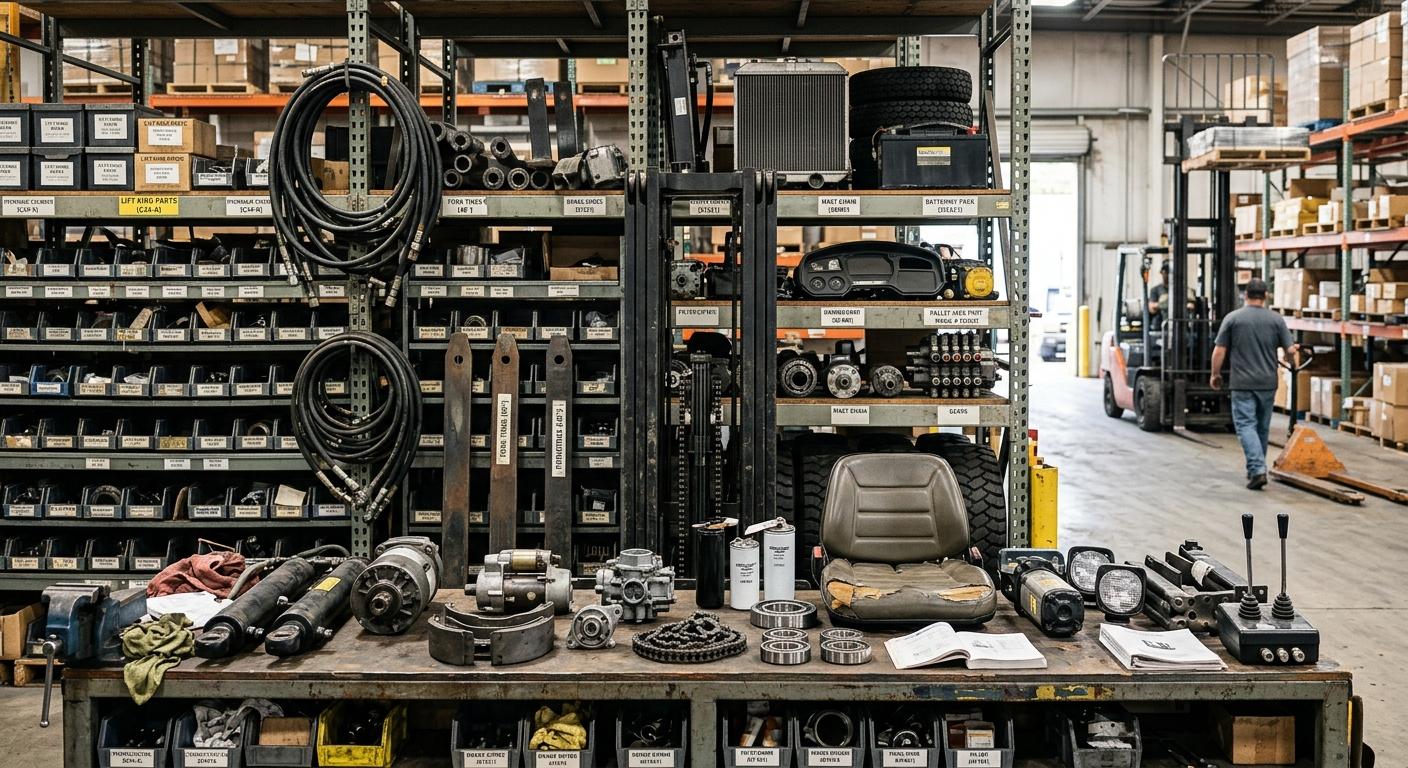
Forklifts are essential machines in warehouses, construction sites, manufacturing facilities, distribution centers, and industrial workplaces. They are designed to move, lift, and position heavy materials efficiently. However, even the most reliable forklift needs regular maintenance and replacement components to continue working safely. Choosing the right forklift parts can improve equipment performance, reduce downtime, and extend the service life of the machine.
Understanding the main components of a forklift also makes it easier to identify maintenance needs. From hydraulic systems and forks to tires, brakes, filters, and electrical components, every part plays an important role in keeping the equipment operational.
Why Quality Forklift Parts Matter
Forklifts operate under demanding conditions and often carry heavy loads for long periods. Components can experience wear from frequent use, uneven surfaces, heavy lifting, and continuous movement. Worn or damaged parts can affect productivity and may create safety concerns for operators and other workers.
Using suitable replacement components helps maintain the original performance of the equipment. Quality parts can also provide better durability and reduce the likelihood of repeated repairs. When selecting replacement components, it is important to consider the forklift's make, model, serial number, operating environment, and required specifications.
Proper maintenance combined with timely replacement can help businesses avoid unexpected equipment failures. It can also support smoother warehouse operations and reduce interruptions caused by mechanical problems.
Common Forklift Components
A forklift contains many mechanical, hydraulic, electrical, and structural components. Some parts require replacement more frequently than others because they are exposed to constant movement or pressure.
Forks and Attachments
Forks are among the most recognizable components of a forklift. They support and lift pallets, containers, boxes, and other loads. Forks must be inspected regularly for cracks, bending, excessive wear, and other signs of damage.
Different jobs may also require specialized attachments. Side shifters, clamps, rotating attachments, and other accessories can expand the capabilities of a forklift. Choosing the correct attachment is important because it must match both the forklift's capacity and the type of material being handled.
Mast Components
The mast allows the forks to move vertically. It consists of several components that work together to provide controlled lifting and lowering. Mast rollers, chains, bearings, and other related components can experience significant wear during normal operation.
Regular inspection of the mast system can help identify problems before they affect lifting performance. Damaged or worn components should be replaced with compatible parts to maintain proper operation.
Hydraulic Parts
The hydraulic system provides the force required for lifting and tilting. Hydraulic pumps, cylinders, hoses, valves, seals, and fittings are important parts of this system.
A hydraulic leak can reduce lifting performance and create a workplace hazard. Operators and maintenance teams should check for leaking fluid, damaged hoses, unusual noises, and slow lifting movement. Replacing worn seals, hoses, or other hydraulic components can help restore system performance.
Forklift Tires
Tires have a direct effect on stability, handling, and movement. Forklifts may use pneumatic, solid, cushion, or other specialized tire designs depending on the operating environment.
Tires can wear faster when forklifts operate on rough surfaces or carry heavy loads frequently. Cracks, uneven wear, low pressure, or damaged surfaces can indicate that replacement is necessary. Selecting the appropriate tire type can improve traction and help the forklift operate effectively on its intended surface.
Engine and Electrical Components
Internal combustion forklifts depend on engines and supporting components such as filters, belts, spark plugs, fuel-system components, and cooling-system parts. Regular servicing helps maintain engine performance and efficiency.
Electric forklifts use batteries, chargers, motors, controllers, and other electrical components. Battery condition is especially important because it directly affects operating time. Damaged cables, connectors, or electrical components should be inspected and replaced when necessary.
Using the correct replacement components for the specific forklift model helps prevent compatibility problems and supports reliable performance.
Brake and Steering Components
Braking and steering systems are critical for safe forklift operation. Brake pads, drums, shoes, cylinders, steering components, and related parts can wear over time.
A forklift that takes longer to stop, pulls to one side, or becomes difficult to steer should be inspected by a qualified technician. Ignoring these warning signs can increase operational risks and lead to more expensive repairs.
Regular maintenance allows businesses to identify worn components before they become major problems.
Choosing the Right Replacement Parts
Selecting replacement parts requires more than simply finding a component that looks similar to the original. The part should be compatible with the forklift's make, model, and specifications.
Businesses should verify the manufacturer's part number whenever possible. Serial numbers and equipment identification information can also help suppliers identify the correct component.
The operating environment should also be considered. A forklift used outdoors may require different tires or protective components than equipment used inside a clean warehouse. Similarly, machines operating in cold, dusty, wet, or demanding environments may need specialized maintenance products and components.
New and Used Forklift Parts
Businesses can choose between new, remanufactured, and used components depending on their equipment needs and maintenance requirements. New parts can provide dependable performance and are often preferred for critical systems.
Used components may be suitable for certain repairs when they have been properly inspected and remain within acceptable operating condition. However, safety-critical components should be carefully evaluated before installation.
Working with a reputable supplier can make it easier to verify component condition, compatibility, and availability.
Maintaining Forklift Parts
Regular inspections are one of the most effective ways to extend component life. Operators should report unusual sounds, leaks, vibration, slow lifting, steering problems, or changes in braking performance.
Maintenance teams can follow the forklift manufacturer's recommended service intervals and inspection procedures. Keeping accurate maintenance records can also help businesses identify recurring problems and plan replacement schedules.
Clean hydraulic systems, properly maintained batteries, suitable tire pressure, and regular lubrication can all contribute to longer component life.
Conclusion
Reliable forklift parts are essential for maintaining safe, efficient, and productive material-handling operations. Components such as forks, mast parts, hydraulic equipment, tires, brakes, steering systems, engines, and electrical systems all contribute to overall forklift performance.
Choosing compatible replacement components and maintaining them properly can reduce unexpected downtime and help extend the working life of valuable equipment. Whether a business needs a single replacement component or parts for ongoing fleet maintenance, selecting the right products from a dependable supplier is an important part of responsible forklift management.

 LMS
LMS
 Reels Series
 Arabic
 English
 French
 Spanish
 Portuguese
 Deutsch
 Turkish
 Dutch
Dutch
 Italiano
 Russian
 Romaian
 Portuguese (Brazil)
 Greek
Greek