
 LMS
LMS
 Reels Series
From Talk Show Host to Author: Bill O’Reilly Multifaceted Career
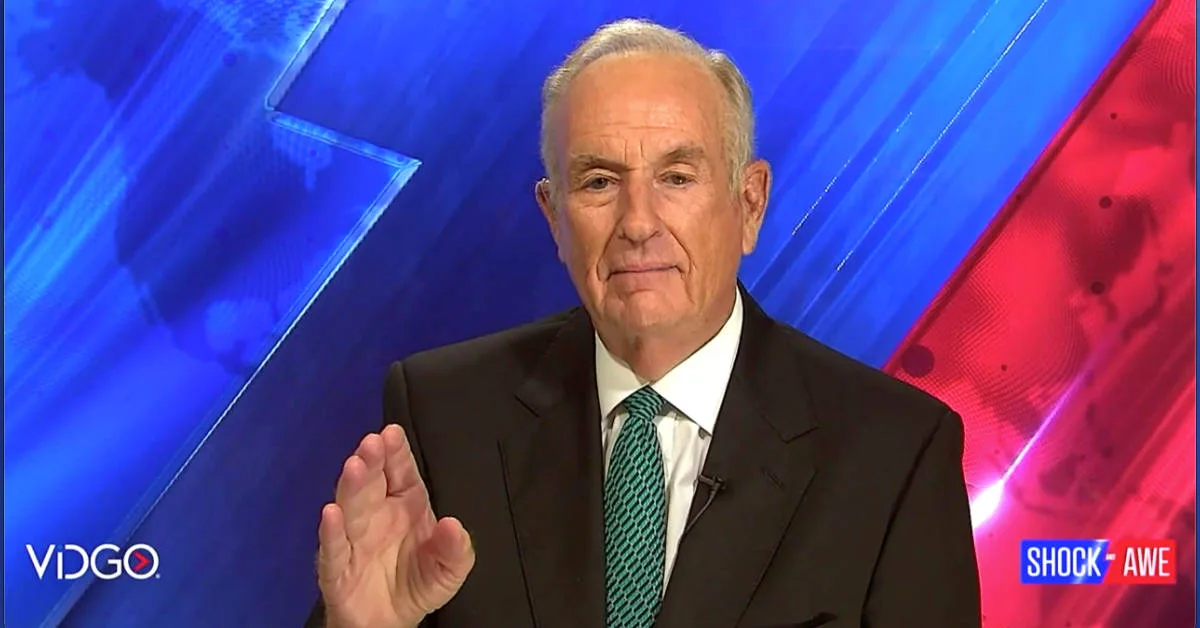
Bill O’Reilly has built a career that extends far beyond the television studio. Best known for his years as the host of The O’Reilly Factor, he became one of the most recognizable figures in American cable news, developing a distinctive style that combined political commentary, interviews, cultural debate, and investigative reporting. Yet television was only one part of his professional life. Over the decades, O’Reilly also worked as a local news reporter, network correspondent, syndicated television host, radio personality, columnist, producer, and bestselling author. His transition from television journalism into publishing became especially significant, turning historical subjects into commercial successes and establishing another major chapter in his career click here.
His professional journey is notable partly because it was not built around a single position or medium. O’Reilly moved repeatedly between different areas of journalism and communication, gathering experience in local television before reaching national audiences. His education also reflected a broad interest in history, journalism, and public affairs. He earned a history degree from Marist College, later completed a master's degree in broadcast journalism at Boston University, and obtained another master's degree in public administration from Harvard University's Kennedy School of Government. These academic experiences gave him a combination of historical knowledge, journalistic training, and familiarity with government and public policy that would influence his later career.
Early Life and the Foundations of His Career
William James O’Reilly Jr. was born on September 10, 1949, in New York City and grew up on Long Island. His early years did not immediately point toward a career in national television or publishing. He grew up in a family environment that emphasized work and discipline, and his early jobs helped shape the practical approach that later became part of his public image.
After graduating from Marist College with a degree in history, O’Reilly spent time teaching high school in Florida. That experience was important because history would eventually become one of the central subjects of his writing career. Rather than moving directly into television, he continued his education, earning a master's degree in broadcast journalism from Boston University. His combination of historical education and journalism training gave him a foundation that would later prove useful when he began writing books about major events and figures in American history.
O’Reilly entered television journalism through local news, beginning in Scranton, Pennsylvania. He subsequently worked in several television markets, including Dallas, Denver, Portland, Hartford, and New York. These positions allowed him to develop the skills expected of a television reporter: researching stories, conducting interviews, working under deadlines, presenting information clearly, and dealing with breaking news.
His work during these early years also brought professional recognition. Awards and industry attention helped establish him as a capable television journalist before he became known primarily as a political commentator. The experience of working in different cities also exposed him to a wide variety of audiences and news environments.
Moving From Local News to National Television
The next stage of O’Reilly’s career brought him into the national news environment. He worked as a correspondent for CBS News and covered international events, including conflicts in El Salvador and the Falkland Islands. He later joined ABC News as a correspondent for World News Tonight. These positions gave him opportunities to report on significant events and develop experience within major American television networks.
This period was different from the later format for which O’Reilly became famous. At this stage, he was primarily working within traditional television news, where correspondents were expected to report stories rather than make themselves the central attraction. The experience gave him exposure to national and international events and helped him become comfortable working in front of a large television audience.
In 1989, O’Reilly made another important career move when he became the anchor of Inside Edition, a nationally syndicated television program. The show occupied a different space from conventional network news, combining news stories with entertainment, celebrity coverage, crime, human-interest stories, and other subjects designed for a broad audience.
O’Reilly's direct presentation style fit the program, and he became one of its most recognizable personalities. His years on Inside Edition helped him understand how to communicate complicated or dramatic stories to a mass audience. He eventually left the program and returned to education, earning a master's degree in public administration from Harvard University's Kennedy School of Government.
His decision to leave a successful television position and continue his education demonstrated that his ambitions extended beyond broadcasting. The additional academic experience gave him a deeper understanding of government, public policy, and political institutions, subjects that would later become central to his television commentary.
The Rise of The O’Reilly Factor
In 1996, O’Reilly joined the newly launched Fox News Channel and became the host of what eventually became The O’Reilly Factor. The program developed into the defining television role of his career. Its format relied heavily on interviews, commentary, debates, news analysis, and discussions of controversial political and cultural subjects.
The program's identity was closely connected to O’Reilly himself. He presented himself as an interviewer willing to challenge politicians, activists, journalists, celebrities, and other public figures. The program's "No Spin Zone" concept became closely associated with his television persona and approach to interviews.
Over time, The O’Reilly Factor became one of the most watched programs in cable news. Its success helped establish O’Reilly as a major media personality and gave him influence beyond the traditional role of a television journalist. His opinions became part of broader political and cultural conversations, while his interviews frequently generated attention outside the program itself.
The show also demonstrated how much the television industry had changed. Cable news allowed personalities to occupy a consistent place in viewers' daily routines. Instead of appearing occasionally as a correspondent, O’Reilly had a regular platform in which his personality, opinions, interviews, and presentation style were central to the program. This helped turn him into a recognizable media brand.
His approach was also controversial. Supporters viewed him as a forceful interviewer who was willing to question people in positions of authority. Critics argued that his confrontational approach sometimes overshadowed conventional journalistic neutrality. Regardless of one's opinion of his methods, his ability to attract viewers and generate discussion became an important part of his professional success.
Expanding Beyond Television
O’Reilly did not limit his career to television. During his years at Fox News, he expanded into radio and print. He hosted The Radio Factor, a nationally syndicated radio program that ran for several years. He also wrote a syndicated newspaper column, giving him another avenue through which to reach readers.
This expansion was important because it meant his audience did not depend entirely on a single television program. His books, newspaper writing, radio broadcasts, and television appearances created several overlapping platforms. The combination allowed O’Reilly to develop a relationship with an audience that followed his work across different forms of media.
The ability to move between formats became one of the defining characteristics of his career. Television established his public identity, while radio and newspapers allowed him to communicate with audiences in different ways. Publishing eventually became the most important addition to this collection of work.
Becoming a Bestselling Author
O’Reilly's career as an author began before his major historical books. His early publications included The O’Reilly Factor, The No Spin Zone, Who’s Looking Out for You?, and the novel Those Who Trespass. His nonfiction books often reflected the themes and arguments associated with his television career, giving readers an opportunity to explore his views in greater detail.
His writing career took a major turn with the publication of Killing Lincoln in 2011, written with Martin Dugard. The book examined the final days of Abraham Lincoln's presidency, his assassination, John Wilkes Booth, and the subsequent effort to capture the assassin.
Rather than presenting the subject as a conventional academic history, the book used a narrative approach designed to give readers a strong sense of movement, suspense, and personal drama. The book became a major commercial success and marked the beginning of a long-running partnership between O’Reilly and Dugard.
The success of Killing Lincoln also demonstrated that O’Reilly's audience was willing to follow him from political commentary into historical nonfiction. This was a significant achievement because the subject matter was far removed from the daily political debates that had made him famous on television.
The book's success opened the door to additional historical works. O’Reilly and Dugard followed it with Killing Kennedy, which examined the assassination of President John F. Kennedy and the political environment surrounding it. The book became another major bestseller and was later adapted into a television film.
For more information check now.
The Killing Series and a New Identity as a Writer
The success of Killing Lincoln and Killing Kennedy established a recognizable formula. O’Reilly and Dugard focused on major historical figures and dramatic moments, presenting them through a narrative structure that emphasized personalities, conflict, political circumstances, and pivotal events.
The series continued with books including Killing Jesus, Killing Patton, Killing Reagan, and Killing the Rising Sun. Later titles expanded the range of historical subjects while retaining the narrative approach that had become associated with the series.
The popularity of these books illustrated an important aspect of O’Reilly's career: his ability to transform his television audience into a readership. People who knew him primarily as a television host were introduced to another side of his work through books that required extensive research and collaboration.
The historical focus also connected with his academic background. O’Reilly had studied history as an undergraduate, and his early career included teaching history. Decades after leaving the classroom, he returned to historical subjects through popular nonfiction. The move was therefore not entirely unexpected; it represented a return to a subject that had been present since the beginning of his adult life.
From Books to Television Productions
O’Reilly's books did not remain confined to bookstores. Several of his historical works were adapted into television productions. Killing Lincoln and Killing Kennedy were turned into television films, demonstrating how his work could move between publishing and television.
The success of these adaptations helped create another professional role for O’Reilly: producer. He became involved with historical documentary programming that combined historical commentary with dramatic reenactments. One notable example was Legends & Lies: The Real West, which focused on famous figures and stories from the American West.
This part of his career is significant because it demonstrates how his different professional interests began to overlap. His background in television gave him an understanding of visual storytelling, while his experience as an author gave him familiarity with historical research and narrative structure. Publishing and television were no longer separate careers; they increasingly supported one another.
A Career Marked by Controversy
Any discussion of Bill O’Reilly's career also has to acknowledge the controversies that surrounded him. His outspoken style frequently attracted criticism, particularly when he made provocative statements about political, religious, and cultural issues. His approach to interviews could also be combative, and disagreements with guests often became part of the public discussion surrounding his program.
His departure from Fox News in 2017 was a major turning point. The network announced that O’Reilly would not return following reports concerning allegations of sexual harassment and settlements. O’Reilly denied wrongdoing in relation to the allegations. The controversy became one of the most consequential events in his professional life and brought his long tenure at Fox News to an end.
Leaving Fox News did not end his media career. Later in 2017, he launched No Spin News, an independent program that allowed him to continue communicating with his audience outside the television network that had made him famous. His continued publishing work also meant that books remained an important part of his professional identity.
The episode illustrates a broader feature of O’Reilly's career. He repeatedly adjusted his platform when circumstances changed. When local television opportunities changed, he moved into national broadcasting. When traditional news was no longer his primary role, he moved into opinion television. When television became only one part of his professional life, he expanded into radio, newspapers, and publishing. After leaving Fox News, he continued through his own media outlet and books.
The Importance of His Historical Writing
O’Reilly's historical books occupy an unusual position in the publishing world. They are not written primarily as academic histories. Instead, they are designed for general readers who may already know the basic outlines of events but want to experience those events through a more dramatic narrative.
This style has helped make historical subjects accessible to a large commercial audience. Readers encounter presidents, military leaders, assassinations, wars, political conflicts, and national crises through stories built around individuals and decisive moments. The approach places emphasis on the human dimension of history: what people wanted, what they feared, the decisions they made, and the consequences that followed.
At the same time, the books have generated debate among historians and critics over questions of interpretation and historical presentation. That debate is part of the larger discussion surrounding popular history, where accessibility and storytelling must be balanced against scholarly standards and complexity.
O’Reilly's books have therefore attracted both readers and critics, making them an influential part of the modern commercial history market. Their success shows that there remains a substantial audience for historical nonfiction when it is presented through a compelling narrative rather than solely through academic analysis.
His Writing Beyond the Killing Books
Although the Killing series became his best-known publishing achievement, O’Reilly's writing has covered several other areas. His memoir A Bold Fresh Piece of Humanity offered readers a personal account of his childhood, education, career, and worldview. Other works explored political and cultural themes that had long been central to his television commentary.
He also wrote Those Who Trespass, a novel that demonstrated an interest in fiction as well as nonfiction. His publishing catalog therefore reflects several sides of his personality and career: the television commentator, the political writer, the historian, the memoirist, and the novelist.
This variety is important when considering his development as an author. Rather than simply reproducing his television work in book form, O’Reilly experimented with different types of writing. Some books focused on political commentary, others on personal experiences, and the Killing series concentrated on historical storytelling.
The Relationship Between Television and Publishing
Perhaps the most interesting aspect of O’Reilly's career is the way television and publishing reinforced each other. Television gave him visibility. Books gave him additional space to develop ideas and tell longer stories. His television audience provided a large potential readership, while the success of his books strengthened his reputation as a media personality whose influence extended beyond the screen.
This relationship is particularly clear in the success of Killing Lincoln. The book was not simply a new project from an unknown writer. It came from a television personality who already had a large audience. Yet the book still had to succeed on its own terms. Its commercial performance showed that O’Reilly could attract readers interested in subjects that were not limited to contemporary political debates.
The same pattern continued with subsequent books. Historical publishing became an important part of his professional identity rather than a side project attached to his television career.
This transition also demonstrated the value of a recognizable public personality in publishing. Readers who already knew O’Reilly from television had a reason to explore his books, while the books themselves introduced his work to people who might not have watched his television program regularly.
A Multifaceted Media Career
Looking at Bill O’Reilly's professional life as a whole reveals a career built across several stages. He began as a local television reporter, moved into national network journalism, became a nationally recognized syndicated television host, joined a new cable news network, built one of its signature programs, expanded into radio and newspaper commentary, and eventually established himself as a bestselling author.
Each stage contributed something to the next. Local reporting taught him the fundamentals of journalism. Network news gave him national and international experience. Inside Edition introduced him to a broad mass audience. The O’Reilly Factor turned him into a household name. Radio and print expanded his reach, while publishing gave him a second major career.
His historical books eventually became significant enough to inspire television adaptations and documentary projects. This demonstrated that his career could move in both directions: television could lead audiences toward his books, while his books could provide material for television.
His career also reflects the changing nature of modern media. A journalist no longer has to remain within one professional category. Television personalities can become authors, authors can become producers, and commentators can create independent media platforms. O’Reilly's career developed along precisely these lines.
The Impact of His Public Persona
A major part of O’Reilly's success has been his ability to maintain a distinctive public persona across different platforms. Whether appearing on television, writing a column, speaking on radio, or publishing a book, he has generally maintained a direct and confident style.
His supporters have often viewed this consistency as one of his greatest strengths. They see him as someone who developed a recognizable voice and remained committed to addressing subjects he considered important. His critics, on the other hand, have argued that the same confidence could sometimes become confrontational or overly partisan.
Either way, the strength of his public persona helped distinguish him in an increasingly crowded media environment. In television especially, personality became a major part of the product. Viewers did not simply tune in for information; many tuned in specifically to hear O’Reilly's interpretation of events.
That recognition proved valuable when he entered publishing. Authors with established audiences have an advantage when introducing books to the public, and O’Reilly's television career gave him an audience that already knew his name and style.
A Career That Continues Beyond One Medium
One of the clearest lessons from O’Reilly's professional journey is the importance of adaptability. His career did not remain tied to the role he held at any particular point. He moved from local reporting to national journalism, from network television to syndicated broadcasting, from cable news to radio, and from television commentary to historical publishing.
This ability to shift platforms helped him remain professionally relevant through major changes in the media industry. The rise of cable news changed the television landscape during his career, while the growth of digital media later created new opportunities for independent broadcasting and direct communication with audiences.
O’Reilly's move into independent media after leaving Fox News showed that a large audience could be maintained outside a traditional television network. His continued work as an author similarly demonstrated that his career was no longer dependent on a nightly television program.
Legacy as a Host and Author
Bill O’Reilly remains a controversial figure, and assessments of his career vary widely depending on political perspective and views about journalism. Supporters point to his ratings, long television run, bestselling books, and ability to engage a large audience. Critics have questioned his commentary, interviewing methods, and handling of controversial subjects. Both perspectives are part of the public record surrounding his career.
What is difficult to dispute, however, is the breadth of his professional work. He was not simply a television host. He was a reporter, correspondent, teacher, commentator, radio host, columnist, producer, and author. His career crossed journalism, broadcasting, publishing, and historical storytelling.
His success as a writer is particularly important because it transformed the second half of his professional identity. The move from nightly television commentary to bestselling historical books could have been difficult for a personality so strongly associated with one program. Instead, publishing became one of the most durable parts of his career.
The historical books also allowed O’Reilly to return to a subject that had interested him since college. His study of history, his early experience as a teacher, and his later interest in major American events all came together in his writing.
Conclusion
Bill O’Reilly's journey from a young history graduate and local television reporter to a nationally recognized host and bestselling author is a story of continual reinvention. His early work in television established the reporting skills that would later define his public career. His years at Inside Edition taught him how to connect with a mass audience, while The O’Reilly Factor turned him into one of the most prominent personalities in cable news.
Yet his greatest professional expansion may have come through books. By turning to historical subjects, particularly in the Killing series, O’Reilly developed a publishing career that could stand alongside his television accomplishments. His books reached a large audience, several became television productions, and his historical storytelling created another avenue for his work.
The combination of journalism, television, radio, commentary, publishing, and production makes O’Reilly's career unusually broad. His methods and opinions have generated substantial debate, but his ability to build audiences across different forms of media is a defining feature of his professional history.
From reporting local news to interviewing national figures, from hosting a major cable program to writing bestselling accounts of American history, Bill O’Reilly has spent decades moving between platforms while maintaining a recognizable public voice. His journey from reporter to television host, from host to commentator, and from commentator to author illustrates how a media career can evolve across multiple industries.
Ultimately, Bill O’Reilly's multifaceted career is not defined by a single television program or a single bestselling book. It is defined by the progression from journalism into broadcasting, from broadcasting into commentary, and from commentary into publishing. His career demonstrates the power of a recognizable voice, a loyal audience, and the willingness to explore new forms of communication. Whether viewed as a journalist, television personality, commentator, or author, O’Reilly has left a substantial mark on American media and popular historical publishing.

 English
 Arabic
 French
 Spanish
 Portuguese
 Deutsch
 Turkish
 Dutch
Dutch
 Italiano
 Russian
 Portuguese (Brazil)
 Greek
Greek