
 LMS
LMS
 Reels Series
Port Automation Modernises Saudi Arabia’s Maritime Trade and Logistics Operations
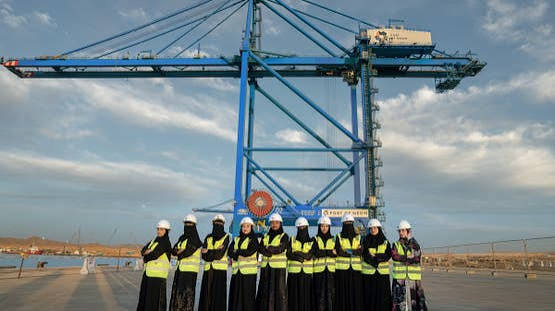
Saudi Arabia’s ports connect domestic industries with international shipping routes across the Red Sea and Arabian Gulf. As cargo volumes, vessel calls, and logistics requirements become more complex, port operators are adopting automated equipment, integrated software, digital documentation, and real-time monitoring systems. These technologies help coordinate the movement of containers, vehicles, bulk commodities, and general cargo while improving operational visibility.
A recent study by Markntel Advisor highlights that the Saudi Arabia port automation sector was valued at USD 1.05 billion in 2025. It is projected to grow from USD 1.20 billion in 2026 to USD 2.65 billion by 2032, registering a CAGR of 14.1% during 2026–2032. Expansion reflects port modernisation, increasing maritime trade, logistics investment, and demand for faster cargo handling.
Automated Equipment Improves Cargo Movement
Container terminals use cranes, straddle carriers, automated guided vehicles, stacking systems, and gate equipment to move cargo between ships, storage yards, trucks, and railway connections. Automation allows some of these machines to complete repetitive movements with limited direct intervention.
Terminal operating systems coordinate equipment assignments, container locations, loading sequences, and yard capacity. Better coordination can reduce unnecessary movements and help operators identify congestion before it disrupts wider terminal activity. Human supervision remains essential for exceptions, equipment maintenance, emergency response, and operational safety.
Digital Documentation Reduces Administrative Delays
Ports exchange large amounts of information with shipping lines, customs authorities, terminal operators, freight forwarders, and other government agencies. Manual or disconnected processes can create repeated data entry, inconsistent records, and delays in vessel or cargo clearance.
The International Maritime Organization’s Maritime Single Window framework supports electronic information exchange between ships, ports, and public authorities. Standardised digital submissions can reduce paperwork while helping authorised participants access accurate information more efficiently.
Vision 2030 Supports Logistics Modernisation
Saudi Arabia aims to strengthen its position within regional and international supply chains. Ports form an important part of this objective because they connect maritime routes with industrial zones, warehouses, airports, roads, and railway networks.
The National Industrial Development and Logistics Program supports the development of Saudi Arabia as a global logistics hub. Port automation can contribute by improving cargo visibility, terminal productivity, and coordination between maritime and inland transport operations.
Artificial Intelligence Supports Operational Planning
Artificial intelligence and analytics can process information from vessel schedules, cargo records, equipment sensors, weather conditions, and yard-management systems. Port operators can use these insights to forecast congestion, assign berths, plan crane activity, and manage container storage.
Predictive maintenance systems can also monitor equipment condition and identify signs of deterioration before a failure interrupts operations. These tools support maintenance teams rather than replacing technical inspection, because sensor readings still require accurate interpretation and suitable maintenance procedures.
Smart Gates Improve Truck Processing
Automated gates can use cameras, optical character recognition, identification systems, and digital appointments to verify vehicles, drivers, and containers. This reduces manual checking and provides more consistent records of cargo entering or leaving a terminal.
Appointment systems can distribute truck arrivals across available operating periods, helping limit queues and road congestion near port facilities. Their effectiveness depends on coordination among terminal operators, transport companies, customs authorities, and drivers.
Cybersecurity Becomes an Operational Priority
Connected cranes, gate systems, cargo databases, and terminal software increase the number of digital assets that require protection. A cyber incident could affect cargo visibility, equipment availability, documentation, or communication between maritime participants.
The IMO’s maritime cyber-risk guidance recommends incorporating cyber-risk management into established maritime safety and security processes. Ports require access controls, network segmentation, secure backups, incident-response plans, employee training, and careful management of third-party connections.
Integration Will Determine Long-Term Performance
Saudi Arabia’s port automation landscape is advancing through automated equipment, digital documentation, smart gates, analytics, and connected logistics platforms. However, technology investment alone cannot guarantee operational improvement.
Long-term value will depend on system interoperability, reliable infrastructure, workforce training, equipment maintenance, cybersecurity, and coordination across the maritime supply chain. When these elements operate together, port automation can improve cargo movement, strengthen logistics reliability, and support Saudi Arabia’s wider role in international trade.
 English
 Arabic
 French
 Spanish
 Portuguese
 Deutsch
 Turkish
 Dutch
Dutch
 Italiano
 Russian
 Romaian
 Portuguese (Brazil)
 Greek
Greek