
 LMS
LMS
 Reels Series
Why Position and Play Style Matter More Than Most Parents Realize When Choosing Youth Football Shoulder Pads
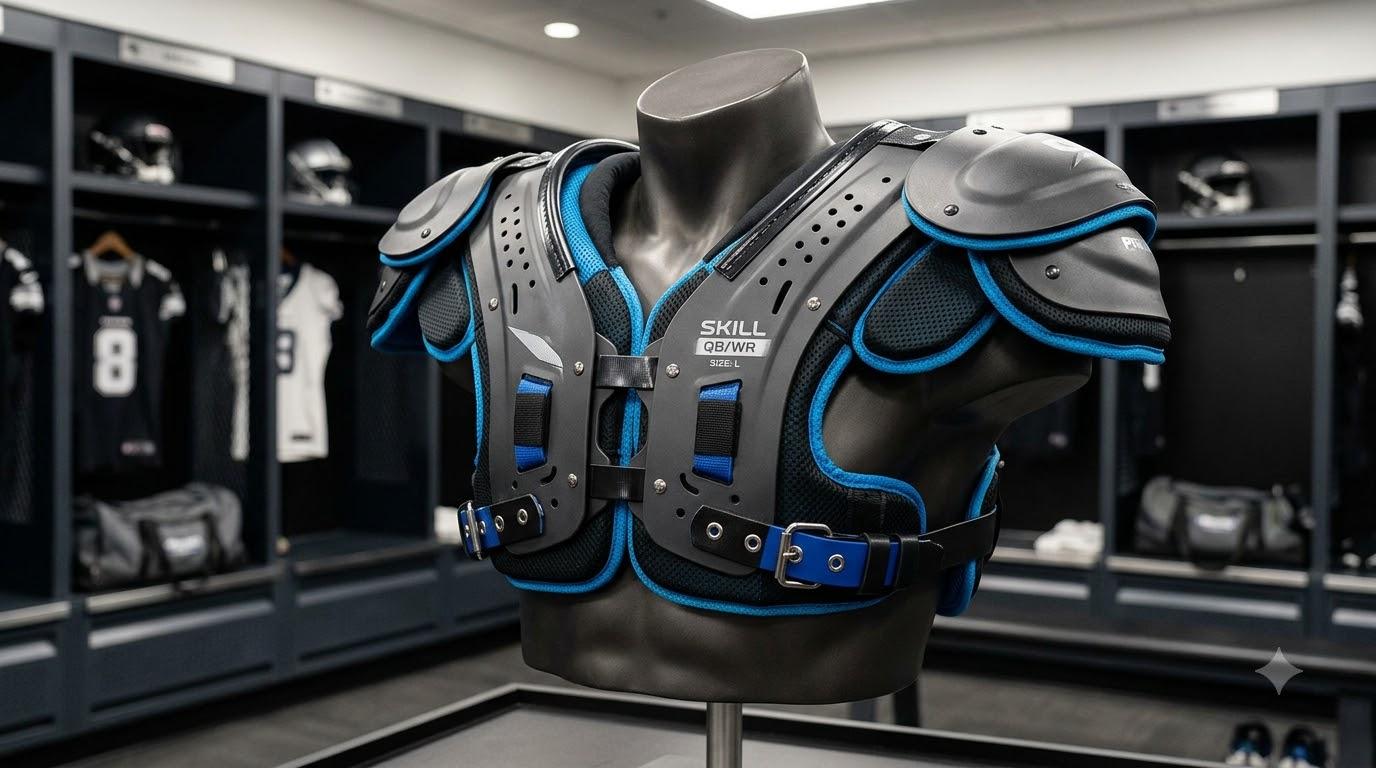
Many parents choose youth football shoulder pads based purely on size and price, without considering that a lineman and a wide receiver have very different protection and mobility needs. Pads built for maximum coverage can restrict the arm movement a skill player needs, while lighter pads designed for mobility may not provide adequate protection for a player absorbing repeated high-contact collisions in the trenches.
This mismatch is a common but overlooked issue at the youth level, where teams often distribute whatever pads are available rather than matching equipment to position-specific demands. The result is either unnecessary discomfort for skill players or inadequate coverage for linemen.
Why Position-Based Fit Differences Exist
-
Contact frequency and intensity vary by position. Linemen engage in repeated high-contact collisions on nearly every play, while skill players need more mobility for cutting and arm extension.
-
Range-of-motion needs differ significantly. A receiver or quarterback needs full arm extension for catching or throwing, which bulkier pad designs can restrict.
-
Pad cap size affects both protection and mobility. Larger caps offer more shoulder coverage but can limit the fluid arm movement skill positions require.
-
League-mandated equipment rules vary. Some youth leagues have specific requirements regarding pad coverage for certain positions, which should factor into equipment selection.
Common Mistakes When Selecting Pads by Position
-
Issuing identical pads to all positions regardless of contact level or mobility needs.
-
Prioritizing price over position-appropriate design, leading to mismatched protection for linemen specifically.
-
Overlooking league rules regarding required coverage for certain positions or age groups.
-
Not consulting the player directly about mobility restrictions they notice during practice reps.
How to Choose Youth Football Shoulder Pads by Position
-
Identify the player's primary position and contact frequency. Linemen and linebackers generally need more coverage; skill players need more mobility.
-
Review league-specific equipment requirements before finalizing pad selection, since some youth associations mandate specific coverage standards.
-
Evaluate cap size and flexibility relative to position — larger, more rigid caps for high-contact positions; more flexible, mobile designs for skill positions.
-
Fit-test with position-specific movements. Have linemen test blocking stance and extension; have skill players test reaching, cutting, and catching motions.
-
Confirm comfort under additional gear, such as jerseys and any padded compression layers worn underneath.
-
Reassess annually as the player's position or role changes, since a player moving from running back to linebacker, for example, may need different pad coverage.
Two Practical Examples
Example 1 — Lineman Using Skill-Position Pads: A youth offensive lineman using lightweight, mobility-focused pads reports shoulder soreness after repeated blocking drills. Switching to youth football shoulder pads designed with larger coverage caps appropriate for high-contact positions reduces the discomfort during contact-heavy practices.
Example 2 — Wide Receiver Restricted by Oversized Pads: A young receiver struggles to fully extend his arms for catches while wearing bulkier pads originally issued for a lineman. Switching to a design with a smaller, more mobile cap appropriate for skill positions improves his range of motion without sacrificing necessary shoulder protection.
Illustrative Case Study: Mismatched Equipment Across a Youth Roster
Problem: A youth football program issued the same shoulder pad model to all players regardless of position, leading to complaints from both linemen and skill players.
Circumstances: Linemen reported discomfort from inadequate coverage during repeated blocking contact, while receivers and quarterbacks reported restricted arm movement.
Solution: The equipment staff reviewed position-specific needs and transitioned to differentiated pad types based on contact level and mobility requirements.
Steps Taken:
-
Categorized the roster by position-based contact and mobility needs.
-
Fitted linemen and linebackers with larger-cap, higher-coverage pad designs.
-
Fitted receivers, quarterbacks, and defensive backs with lighter, more mobile pad designs.
Outcome: Reports of shoulder discomfort among linemen decreased, and skill players noted improved range of motion during practice drills.
Lesson: Matching pad design to position-specific contact and mobility demands resolves issues that uniform equipment distribution often creates.
Comparing Pad Considerations by Position Type
|
Position Category |
Contact Frequency |
Mobility Priority |
Recommended Pad Emphasis |
|
Linemen / Linebackers |
High |
Lower |
Larger coverage caps, higher protection |
|
Skill positions (WR, RB, DB) |
Medium |
High |
Lighter, more flexible cap design |
|
Quarterbacks |
Low–Medium |
Very high |
Maximum mobility, moderate coverage |
Limitations and Trade-Offs
No single shoulder pad design perfectly balances maximum protection and maximum mobility — choosing youth football shoulder pads always involves some trade-off based on position-specific priorities. League rules may also limit certain customization options, so checking requirements before purchasing is an important step, not an afterthought.
What to Do Next
If a young athlete reports discomfort or restricted movement during practice, consider whether the pad design matches their position's actual contact and mobility needs rather than assuming the issue is fit alone. Reviewing youth football shoulder pads by position category — rather than a one-size-fits-all approach — typically resolves both comfort and protection concerns more effectively.
Frequently Asked Questions
Do all positions need the same type of shoulder pads?
No. Linemen generally need more coverage for repeated contact, while skill positions need lighter, more mobile designs for reaching and cutting.
How do I know if my league has specific pad requirements?
Check with the league administration directly, since youth football associations often have specific rules regarding required coverage for certain positions or age groups.
Can a player use the same pads if they change positions?
Not always. A position change, such as moving from a skill position to the line, may require a different pad design to match new contact demands.
What's the biggest mistake teams make when distributing pads?
Issuing identical pads to the entire roster regardless of position, which can create discomfort for linemen and restricted mobility for skill players.
How often should position-based pad needs be reassessed?
Annually, or whenever a player's position or role changes significantly, since contact level and mobility needs can shift accordingly.

 English
 Arabic
 French
 Spanish
 Portuguese
 Deutsch
 Turkish
 Dutch
Dutch
 Italiano
 Russian
 Portuguese (Brazil)
 Greek
Greek