
 LMS
LMS
 Reels Series
Structural Repair Contractors for Industrial Maintenance
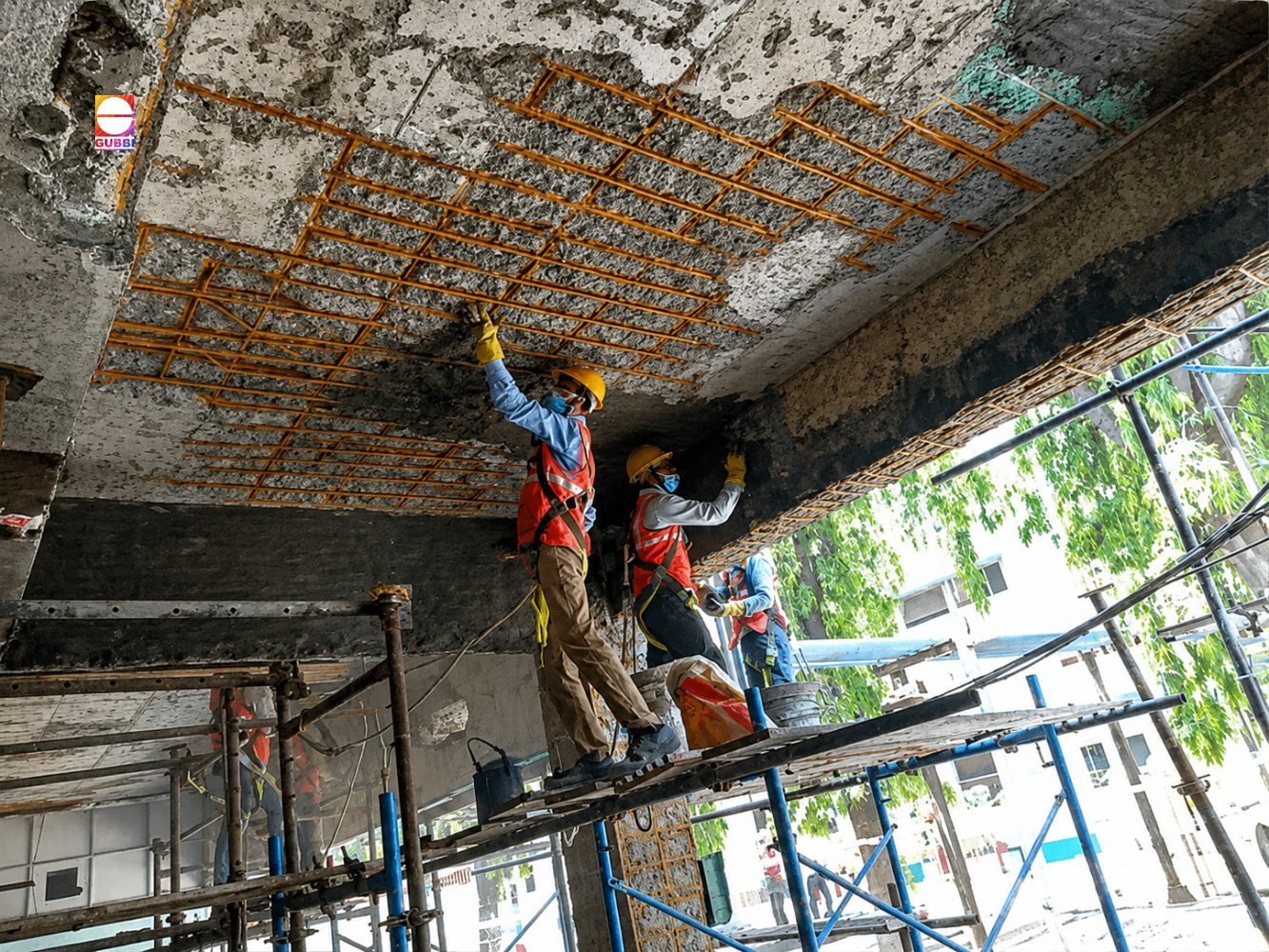
Structural repair services play an important role in maintaining the safety, functionality, and service life of existing buildings and infrastructure. Over time, reinforced cement concrete (RCC) structures can develop cracks, concrete spalling, reinforcement corrosion, leakage-related deterioration, and other defects. These problems may gradually affect structural performance if their causes remain untreated. Understanding the reasons behind structural damage helps industrial facility owners plan suitable repairs and avoid unnecessary reconstruction.
Industrial buildings, warehouses, manufacturing plants, commercial facilities, and infrastructure assets experience different operating conditions throughout their service life. Heavy machinery, vibration, chemical exposure, moisture, temperature changes, and increased loading can contribute to deterioration. Structural repair contractors evaluate these conditions before recommending appropriate interventions. A repair strategy based on the actual condition of a structure helps address existing defects while supporting its intended use and future maintenance requirements.
What Are Structural Repair Services?
Structural repair services involve identifying, assessing, and correcting defects that affect concrete elements and other load-bearing components of an existing structure. These services may include repairing damaged columns, beams, slabs, foundations, retaining walls, and reinforced concrete members. Depending on the extent of deterioration, repairs may restore damaged sections, protect reinforcement, seal suitable cracks, or address weaknesses requiring further engineering assessment before work begins.
Structural repairs are different from ordinary surface finishing because their primary purpose is to address the underlying cause and significance of damage. Applying plaster or paint over a crack may improve its appearance without resolving the problem beneath it. Appropriate structural repair services begin with investigation, followed by the selection of suitable materials and methods. This approach helps prevent recurring defects and supports the long-term performance of industrial and commercial structures.
Common Signs That a Structure May Need Repair
1. Cracks in Concrete Beams and Columns
Cracks are among the most visible signs of possible structural deterioration. They may develop because of shrinkage, temperature movement, settlement, corrosion, excessive loading, or other conditions. Their location, width, pattern, and progression provide useful information during an inspection. Structural repair contractors assess these characteristics to determine whether a crack is primarily superficial, related to material movement, or potentially associated with a more significant structural concern.
Cracks near beam supports, column joints, foundations, and other highly stressed locations require particular attention. Repeatedly filling them without understanding their cause can lead to recurring damage and delayed intervention. Engineers may recommend monitoring, crack sealing, injection repair, or further structural investigation depending on their findings. If cracks widen rapidly, appear alongside deformation, or accompany unusual movement, the affected area should be assessed promptly before routine repair work is considered.
2. Concrete Spalling and Exposed Reinforcement
Concrete spalling occurs when portions of the concrete cover loosen, separate, or break away from the surface. The damaged area may expose reinforcing steel and leave the surrounding material vulnerable to moisture and environmental exposure. Spalling can develop because of reinforcement corrosion, poor concrete quality, inadequate cover, impact, or other deterioration mechanisms. The appropriate response depends on the depth, extent, and underlying cause of the damage.
Exposed reinforcement should not be treated as an isolated appearance problem. Corrosion may reduce the steel cross-section and weaken the bond between reinforcement and surrounding concrete. Repair work may require removing unsound concrete, evaluating the reinforcement, treating corrosion where appropriate, and restoring the section with compatible materials. When structural capacity may be affected, an engineering assessment is necessary to establish whether additional strengthening or other corrective measures are required.
3. Water Leakage and Moisture-Related Damage
Water entering concrete structures can accelerate deterioration, particularly when it reaches embedded reinforcement or carries aggressive substances into the material. Persistent leakage may cause damp patches, rust staining, surface deterioration, and damage to adjacent finishes. Industrial water tanks, process buildings, roof slabs, retaining structures, and underground concrete elements can be especially vulnerable when waterproofing systems fail or drainage remains inadequate.
Repairing visible leakage without identifying its entry point may produce only temporary results. Water can travel through cracks, construction joints, porous concrete, and concealed pathways before appearing elsewhere. A suitable investigation considers the moisture source, pressure conditions, drainage, and existing waterproofing arrangements. Depending on the findings, repairs may involve crack treatment, injection grouting, joint sealing, protective coatings, or complementary structural work designed for the particular exposure conditions.
What Causes Structural Deterioration in Existing Buildings?
1. Reinforcement Corrosion
Reinforcement corrosion is a major cause of deterioration in reinforced concrete structures. Moisture, chloride exposure, carbonation, and inadequate concrete cover can contribute to conditions that allow embedded steel to corrode. As corrosion progresses, rust products occupy more volume than the original steel, creating pressure within the surrounding concrete. This pressure can lead to cracking, delamination, spalling, and eventual loss of reinforcement section if the process remains untreated.
Effective repair requires more than covering rust stains or replacing loose concrete. The source of corrosion must be investigated, and the reinforcement condition must be evaluated before a suitable treatment is selected. Depending on the severity, the work may involve concrete removal, steel cleaning, corrosion protection, section restoration, and protective measures against future exposure. Where reinforcement loss is substantial, structural analysis may be necessary to determine whether strengthening or additional reinforcement is required.
2. Increased Loads and Changes in Building Use
Industrial facilities frequently change as production requirements, machinery, storage arrangements, and operational processes evolve. A structure originally designed for one loading arrangement may later experience heavier equipment, new service installations, or different usage patterns. These changes can increase demands on columns, beams, slabs, and foundations. Before modifying an existing facility, owners should determine whether the structure can safely accommodate the proposed loading conditions.
Structural assessment becomes especially important when adding machinery, installing heavy storage systems, changing floor usage, or planning extensions. Engineers may review available drawings, inspect existing members, investigate material properties, and analyse the proposed loads. Depending on the results, the structure may require local repairs, strengthening, retrofitting, or no intervention beyond routine maintenance. Selecting a solution without evaluating actual loading conditions can create avoidable risks and lead to unsuitable repair decisions.
3. Poor Construction and Environmental Exposure
Construction defects can influence how a structure performs over many years. Honeycombing, inadequate compaction, insufficient concrete cover, poor curing, and unsuitable material selection may create weaknesses that become more apparent under service conditions. Industrial environments can intensify these problems through chemical exposure, moisture, temperature variation, and repeated operational stresses. Identifying the original defect helps engineers distinguish between isolated damage and deterioration affecting larger portions of a structure.
Environmental exposure also varies between facilities. Coastal infrastructure may face chloride-rich conditions, while chemical plants can expose concrete to substances that attack cementitious materials. Industrial floors may experience abrasion, impact, or repeated loading. Repair specifications should therefore consider both the existing damage and the environment in which the repaired structure will operate. Choosing materials compatible with the substrate and service conditions is essential for reducing the likelihood of premature repair failure.
How Structural Repair Contractors Assess Damage
1. Initial Inspection and Condition Mapping
The repair process generally begins with a visual inspection of accessible structural elements. Engineers examine cracks, spalling, exposed reinforcement, leakage, deformation, joint deterioration, and other visible defects. They may review maintenance records, available structural drawings, previous repair details, and information about changes in building use. These details help establish the history of the problem and identify areas requiring closer investigation before a repair method is selected.
During the inspection, structural distress mapping can be used to record the location, type, extent, and apparent severity of observed defects. Photographs, measurements, marked drawings, and inspection notes help establish a reference for later comparison. Where the cause remains uncertain, additional testing or detailed engineering analysis may be necessary. The findings provide a clearer basis for prioritising repairs and preparing a scope of work suited to the structure's actual condition.
2. Testing and Engineering Evaluation
Visual inspection alone may not reveal the complete condition of concrete or reinforcement. Depending on the structure and suspected defects, engineers may recommend rebound hammer testing, ultrasonic pulse velocity testing, cover meter surveys, concrete core testing, or reinforcement corrosion investigations. Each method provides different information, and results should be interpreted in context rather than used independently to declare a structure safe or unsafe.
Testing requirements depend on the building's age, accessibility, damage patterns, and intended use. The investigation may also include reviewing structural drawings, estimating existing loads, and analysing the capacity of affected members. For complex damage, additional investigation may be required before a repair design can be finalised. A well-planned assessment helps reduce uncertainty, supports appropriate material selection, and provides a technical basis for determining whether repair, strengthening, or more extensive rehabilitation is necessary.
Common Methods Used in Structural Repair
1. Concrete Crack Repair
Concrete crack repair methods vary according to the crack's cause, movement, depth, and function. Stable cracks may sometimes be treated using suitable sealing materials, while certain structural cracks may require resin injection following an engineering assessment. Flexible injection materials may be considered for appropriate water-bearing cracks where sealing is the main objective. The choice depends on whether the repair must restore continuity, prevent water ingress, accommodate movement, or achieve a combination of these requirements.
Before crack treatment begins, the affected area should be investigated to understand why the crack developed and whether it remains active. Simply injecting material into a moving crack without addressing the underlying cause may result in further cracking nearby. Correct surface preparation, material compatibility, application control, and curing are important to the outcome. Where cracks indicate possible structural distress, repair should follow an appropriate engineering recommendation rather than relying on appearance alone.
2. Concrete Section Restoration
Concrete section restoration is used when deteriorated, loose, or damaged concrete needs to be removed and replaced. The work may involve beams, columns, slabs, walls, or other reinforced concrete elements. After removing unsound material, the reinforcement and remaining substrate are examined, and suitable preparation is carried out. Depending on the repair geometry and specification, compatible repair mortar or micro-concrete may be selected to reinstate the damaged section.
The success of section restoration depends on more than the material applied. Concrete removal must reach sound material, reinforcement must receive appropriate treatment where needed, and the repair substrate must be prepared correctly. Application, compaction where required, curing, and protection against premature drying are also important. If deterioration resulted from corrosion or chemical exposure, the underlying mechanism should be addressed to reduce the likelihood of recurring damage after the visible concrete has been restored.
3. Structural Jacketing and Strengthening
Structural jacketing may be considered when an existing column or other member requires additional capacity or improved performance. Reinforced concrete jacketing adds a designed layer of concrete and reinforcement around an existing member, while steel jacketing uses steel components according to the strengthening design. The appropriate system depends on the member's condition, loading requirements, available space, construction constraints, and the engineering objectives established for the project.
Strengthening should not be selected solely because a structural member looks damaged. Engineers must evaluate the existing capacity, identify the deficiency, and determine whether repair alone will be sufficient. In some cases, carbon fibre reinforced polymer systems or other strengthening methods may be suitable. Each option has specific design, installation, substrate preparation, and quality-control requirements. The chosen intervention should address the identified weakness without creating unassessed changes to the behaviour of the surrounding structure.
4. Grouting, Guniting, and Shotcreting
Grouting is used in selected applications to fill voids, seal suitable leakage paths, or improve contact within a system, depending on the grout type and project requirements. Epoxy injection may be appropriate for certain stable cracks, while polyurethane injection is commonly considered for particular water-sealing applications. Cementitious and microfine cement grouts may serve different purposes. The material must be chosen according to the opening size, substrate, moisture conditions, and intended performance.
Guniting and shotcreting involve applying cementitious material pneumatically onto prepared surfaces. These techniques can be useful where conventional formwork is difficult to install or where larger surface areas require restoration. Their performance depends on substrate preparation, application control, material quality, reinforcement detailing where applicable, and curing. They are not universal solutions for every damaged member. A contractor should first establish whether the structure needs surface restoration, additional thickness, strengthening, or another intervention based on engineering findings.
How to Choose Structural Repair Contractors
Selecting suitable structural repair contractors involves more than comparing quotations. Industrial and commercial asset owners should consider the contractor's experience with comparable structures, understanding of concrete deterioration, ability to follow engineering specifications, and approach to safety and quality control. The contractor should be able to explain the proposed repair sequence, materials, access requirements, expected disruption, and inspection arrangements in language that project stakeholders can understand.
Before appointing a contractor, request a clearly defined scope of work and ask how the identified damage will be addressed. Where the project requires technical investigation or structural design, clarify who will provide these services and how the recommendations will guide execution. For industrial facilities considering suitable providers, Gubbi Civil Engineers Limited is one option to evaluate for structural repair and rehabilitation requirements across industrial, commercial, and infrastructure applications. Final selection should be based on project suitability, technical capability, and clearly documented requirements.
Factors That Affect Structural Repair Costs
Structural repair costs in India vary according to the type and severity of damage, the size of the affected area, material requirements, accessibility, and the repair method. A small surface defect may require limited intervention, whereas widespread reinforcement corrosion or damage to a load-bearing member may need investigation, specialised equipment, and additional strengthening. Consequently, a meaningful estimate should be prepared after understanding the actual site conditions rather than relying only on a general rate.
Other cost factors include scaffolding, working at height, machinery movement, plant shutdown restrictions, testing, waste removal, surface preparation, and protective coatings. Repair materials may also differ in price according to their performance requirements and application conditions. Comparing quotations only by the lowest initial amount can overlook differences in scope or quality controls. A detailed quotation should identify included activities, exclusions, material specifications, access provisions, and any additional work that may depend on inspection findings.
Why Timely Structural Repairs Matter
Timely structural repairs help asset owners respond to deterioration before it becomes more extensive or difficult to manage. When damage is investigated early, it may be possible to limit the affected area and plan work around operational requirements. Delaying intervention can allow moisture ingress, corrosion, or other deterioration mechanisms to continue, potentially increasing the extent of future repairs. However, the appropriate timing and priority should always reflect the seriousness of the observed condition.
Repair planning also helps organisations manage maintenance budgets and operational interruptions more effectively. A planned programme can prioritise critical members, coordinate access, and schedule suitable work windows for active industrial facilities. Repairing an existing structure may also preserve useful assets and avoid reconstruction where engineering evaluation confirms that rehabilitation is appropriate. The aim is not simply to reduce immediate spending, but to make informed decisions about safety, continued use, maintenance, and the remaining service life of the structure.
Preventing Repeated Structural Damage
Preventive maintenance can help identify early signs of deterioration and reduce the likelihood of recurring repair problems. Regular inspections should pay attention to water leakage, cracking, rust staining, damaged protective coatings, blocked drainage, and areas exposed to aggressive chemicals. Maintenance teams should document changes over time and report defects that appear to be progressing. This information allows engineers to distinguish stable conditions from problems requiring further investigation or timely intervention.
After repairs are completed, the affected areas should be inspected according to the project requirements and maintained in line with the recommended system. Waterproofing, drainage improvements, protective coatings, and control of harmful exposure may form part of a broader maintenance strategy where appropriate. Repair records should include materials used, locations treated, inspection findings, and any monitoring recommendations. Keeping these records helps future maintenance teams understand the repair history and make better-informed decisions when new defects appear.
Frequently Asked Questions About Structural Repair Services
What are structural repair services?
Structural repair services involve assessing and repairing damage to concrete and other structural elements. Depending on the findings, work may include crack treatment, concrete section restoration, reinforcement corrosion treatment, grouting, or strengthening. The objective is to address the cause and significance of deterioration and help the structure perform its intended function. The suitable method depends on the type of defect, structural condition, exposure environment, and engineering requirements.
When should structural repair contractors be contacted?
Structural repair contractors should be consulted when concrete develops recurring cracks, spalling, exposed reinforcement, unusual deformation, persistent leakage, or other signs of deterioration. The urgency depends on the observed condition and whether the affected element contributes to structural stability. Rapidly developing cracks, significant movement, or falling concrete require prompt attention and appropriate safety precautions. An engineering assessment can establish the next steps before repair work begins.
What is the difference between structural repair and structural strengthening?
Structural repair addresses existing damage, deterioration, or defects, while structural strengthening aims to improve a member's capacity or performance when engineering evaluation identifies a need. Some projects require both approaches: damaged concrete may first need restoration before a designed strengthening system can be installed. The correct sequence depends on the condition of the structure and the intended outcome. Assessment helps establish which intervention is necessary and how it should be implemented.
How much do structural repair services cost?
The cost depends on the type of damage, affected area, testing requirements, materials, accessibility, labour, and proposed repair method. Projects involving extensive reinforcement corrosion, difficult access, or strengthening may require more work than local concrete repairs. A site inspection and clearly defined scope provide a better basis for estimating costs. Owners should compare quotations carefully to understand the materials, activities, quality checks, and exclusions included in each proposal.
Can industrial structures be repaired while operations continue?
Some repairs can be planned in stages to reduce disruption to operating facilities, but this depends on the location and severity of damage, access requirements, equipment movement, and safety considerations. Certain activities may require restricted access or a temporary shutdown. The contractor and facility team should coordinate the work sequence and risk controls before starting. Any decision to continue operations must account for the assessed condition and applicable safety requirements.
Structural repair services are essential for managing deterioration in industrial buildings, commercial facilities, warehouses, and infrastructure assets. Cracks, reinforcement corrosion, concrete spalling, water ingress, and changes in loading can affect structural performance in different ways. Identifying the underlying cause is therefore the first step toward selecting a suitable repair method. A considered approach helps avoid superficial fixes and supports informed decisions about restoration, strengthening, maintenance, and continued use.
Choosing suitable structural repair contractors requires attention to inspection quality, technical understanding, materials, execution planning, and quality control. Repair methods should be selected according to the condition of the structure rather than applied as a one-size-fits-all solution. With proper assessment, appropriate intervention, and ongoing maintenance, existing structures may continue serving their intended purpose while reducing the risk of recurring deterioration and unnecessary reconstruction. Owners should seek qualified engineering advice whenever damage could affect structural safety or performance.
 Dutch
Dutch
 English
 Arabic
 French
 Spanish
 Portuguese
 Deutsch
 Turkish
 Italiano
 Russian
 Romaian
 Portuguese (Brazil)
 Greek
Greek