
 LMS
LMS
 Reels Series
Medication Management at Home in Lahore: Why Professional Support Matters
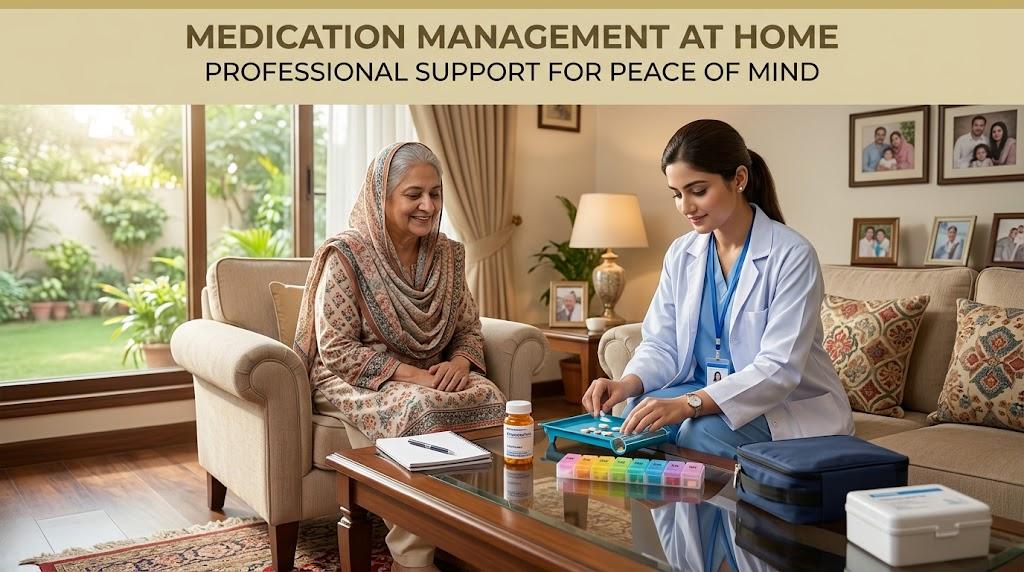
Taking the right medicine at the right time sounds simple, yet many families in Lahore struggle with it daily. Missed doses, confusing prescriptions, and mixed-up tablets can harm recovery. This blog explains how professional medication management at home protects patients and why trained support truly matters for safer health outcomes.
What Is Medication Management at Home?
Medication management means organising, administering, and monitoring a patient’s medicines according to the doctor’s prescription. At home, a trained nurse or caregiver ensures correct doses, proper timing, and safe handling. It reduces confusion, prevents mistakes, and helps patients follow treatment plans consistently, especially when several different medicines are prescribed together.
Why Lahore Families Need Professional Help
Many Lahore households juggle work, traffic, and family duties, leaving little time to supervise medicines. Elderly parents often live alone or depend on busy relatives. Professional support ensures nothing is forgotten, giving families reassurance that treatment continues correctly even when they cannot be present at the patient’s bedside every day.
Common Medication Errors at Home
Everyday mistakes include skipping doses, doubling tablets, stopping antibiotics early, and confusing similar-looking medicines. Poor eyesight, memory problems, and unclear handwriting add to the risk. These errors can weaken treatment, cause side effects, or trigger emergencies, which is why careful supervision becomes so valuable for vulnerable patients staying at home.
The Hidden Risks of Multiple Medicines
Older adults frequently take five or more medicines daily for different conditions. Combining them without guidance can cause dangerous interactions, dizziness, falls, or kidney strain. A professional reviews the full list, flags concerns to the doctor, and helps simplify routines so patients stay safer and more comfortable throughout the day.
The Role of Professional Nurses
Home nurses verify each prescription, prepare correct doses, and administer medicines at scheduled times. They record every dose, observe how the patient responds, and report unusual symptoms promptly. Their clinical training allows them to recognise problems early, something relatives without medical backgrounds may easily overlook during stressful, busy daily routines.
Smart Schedules and Reminders
A clear schedule is the backbone of safe medication use. Professionals create simple charts, use labelled pill organisers, and set reminders for morning, afternoon, and night doses. They also note which medicines need food or an empty stomach, making routines easier for patients and families to follow consistently, every single day.
Injections and IV Medication at Home
Some treatments cannot be taken by mouth. Trained nurses safely give injections, insulin doses, IV fluids, and antibiotics at home using sterile equipment. They verify dosage, rotate injection sites, and watch for allergic reactions, sparing patients tiring hospital visits while maintaining strict clinical safety standards throughout the entire course of treatment.
Monitoring Side Effects and Reactions
Every medicine can cause side effects, from mild nausea to serious allergic responses. Nurses carefully check blood pressure, pulse, sugar levels, and general condition after doses. If something seems wrong, they contact the treating doctor immediately, preventing small reactions from becoming dangerous medical situations that could require urgent hospital admission.
Support for Chronic Conditions
Diabetes, hypertension, heart disease, and thyroid problems demand lifelong medication discipline. Professional caregivers ensure regular dosing, track readings, and encourage healthy diet habits. Consistent support keeps conditions stable, reduces complications, and lowers the chances of sudden hospitalisation, helping patients maintain better long-term health and a good quality of life daily.
Safe Medication After Hospital Discharge
The days after hospital discharge are risky because new prescriptions often replace old ones. Nurses compare discharge papers with existing medicines, remove outdated items, and explain changes clearly. This careful reconciliation reduces confusion, supports recovery, and lowers the likelihood of readmission during the patient’s vulnerable first few weeks at home.
Safe Storage and Disposal
Medicines lose strength when stored poorly, especially in Lahore’s intense summer heat. Professionals advise keeping tablets in cool, dry places, refrigerating insulin properly, and checking expiry dates. They also help dispose of old medicines safely, protecting curious children and vulnerable elderly relatives from accidental, harmful consumption within the whole household.
Coordination with Doctors and Pharmacists
Good medication management connects patients, doctors, and pharmacists. Home care professionals share observations, update medication lists, and request clarification when prescriptions seem unclear. This teamwork ensures changes are communicated accurately, duplicate prescriptions are avoided, and the patient receives consistent, coordinated treatment from everyone involved in their daily care and recovery.
Educating Families with Confidence
Professionals also teach families how to handle medicines confidently. They explain purposes, doses, warning signs, and what to do after a missed dose. Informed relatives become active partners in care, able to notice problems early and ask better questions during doctor appointments. Simple practical teaching removes fear and builds trust.
Care for Dementia and Memory Loss
Patients with dementia, stroke, or memory loss often forget doses or refuse tablets. Trained caregivers use patience, gentle, caring encouragement, and consistent routines to ensure medicines are taken safely. They never leave tablets unattended, protecting vulnerable patients from accidental overdose or unintentional missed treatment throughout the entire day and night.
Signs Your Loved One Needs Medication Support
Watch for unopened tablet strips, confusion about doses, sudden drowsiness, repeated missed appointments, or unexplained worsening symptoms. Frequent falls and refusing medicines are also warning signs. If you notice these patterns, arranging professional help early can prevent complications and restore safe, dependable routines for the patient and their entire family.
How to Choose a Reliable Provider
Choose a licensed provider whose nurses are verified, experienced, and trained in medication safety. Ask about documentation practices, emergency procedures, and flexible shifts. A reliable service communicates clearly, respects privacy, and works closely with your doctor, ensuring every prescription is followed accurately and safely at every single visit and shift.
Book Homecare Services in Lahore via Instacare
Need dependable help with medicines? Book homecare services in Lahore via Instacare for qualified nurses and caregivers who manage prescriptions, injections, and monitoring at your doorstep. Share the patient’s needs, pick a convenient schedule, and receive compassionate, affordable support so your family can focus calmly on the patient’s full recovery.
Conclusion
Medication management at home is far more than reminding patients to take tablets. Professional support prevents errors, monitors reactions, and keeps treatment on track. For families in Lahore, trained care brings safety, comfort, and confidence, helping patients recover well and live healthier lives in familiar surroundings, with dignity and peace.
FAQs
1. What is medication management at home?
It means a trained professional organises, administers, and monitors medicines as prescribed by the doctor, ensuring correct doses, timing, and safety.
2. Why is professional support better than family supervision?
Nurses are trained to spot side effects, interactions, and dosing errors that families may miss, and they keep accurate records for the doctor.
3. Can nurses give injections and IV medicines at home?
Yes. Qualified nurses can give prescribed injections, insulin, and IV therapy at home using sterile equipment and proper safety checks.
4. Who benefits most from home medication support?
Elderly people, patients with chronic illnesses or dementia, and those recently discharged from hospital benefit the most.
5. How can I book a nurse through Instacare?
Contact Instacare, share the patient’s condition and medication needs, choose a schedule, and a suitable professional will be arranged.
 Arabic
 English
 French
 Spanish
 Portuguese
 Deutsch
 Turkish
 Dutch
Dutch
 Italiano
 Russian
 Romaian
 Portuguese (Brazil)
 Greek
Greek