
 LMS
LMS
 Reels Series
7 Signs You Have Wildlife in Your Attic (and What to Do Next) | Toronto & GTA Guide
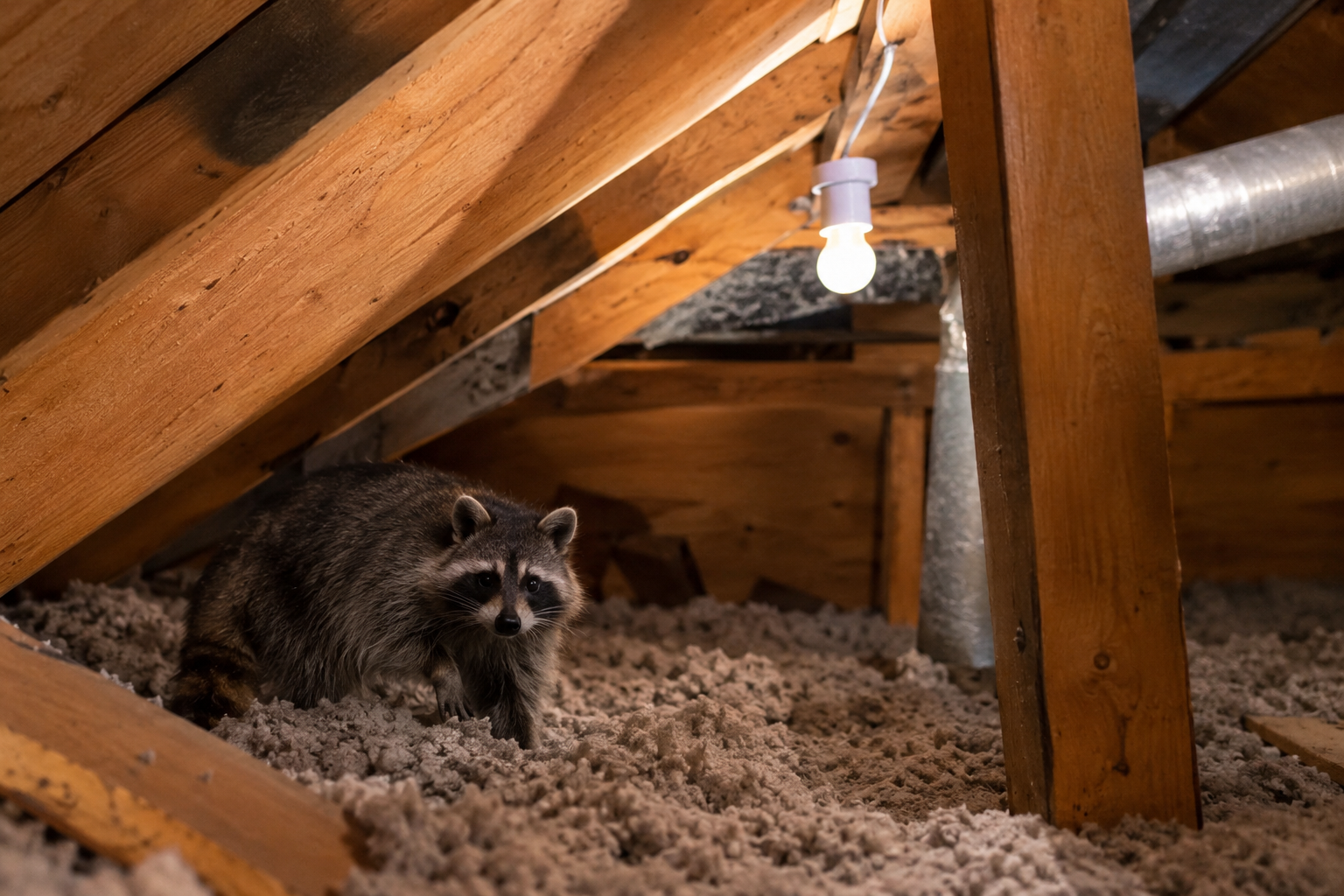
How Do You Know If Wildlife Is in Your Attic?
The most common signs of wildlife in an attic are thumping or scratching noises, a strong urine smell, droppings, damaged soffits or vents, chewed wiring, torn insulation and sounds of chattering or crying. Heavy night-time noise usually points to raccoons, while fast daytime scampering usually points to squirrels. If you notice any of these, do not seal the opening yourself. Have a professional check for young animals first. GTA Pest Solutions offers a free inspection across Toronto and the GTA through our wildlife removal Toronto service.
What You Will Learn
• The 7 most reliable warning signs, and what each one usually means
• How to tell raccoons, squirrels, skunks, birds and bats apart by sound and timing
• What to do tonight, and what never to do
• When it is safe to act and when to call a pro
• How to keep wildlife out for good
The 7 Warning Signs of Wildlife in Your Attic
1. Heavy Thumping or Rolling at Night
Loud thumps, dragging or rolling sounds after dark are the classic sign of raccoons. They are strong and move heavily, so people often compare the noise to someone walking in the attic. A mother raccoon looking for a den, especially in spring, is a common cause. See our raccoon removal service for how this is handled humanely.
2. Fast Scratching or Scampering in the Daytime
Squirrels are active during the day and sound light and quick. Fall is a common time for them to look for warm winter shelter, and they often get in through soffits and roofline gaps. Learn more about squirrel removal in Toronto.
3. A Strong, Lingering Smell
An ammonia-like smell can come from urine buildup, and animals often return to the same spot to relieve themselves. A smell that does not go away after airing out the house is worth investigating, because contaminated insulation may need removal.
4. Droppings, Nesting Material or Tracks
Droppings, shredded insulation and gathered debris suggest an established nest. Avoid touching droppings or nesting material with bare hands, since they can carry health risks in enclosed spaces. Have the area assessed safely before any cleanup.
5. Damaged Soffits, Fascia, Vents or Chimney Caps
Bent vent covers, pulled-back soffits, torn screens and gaps along the roofline are often the entry point. Animals need very little space to get in, and every opening you can see from outside deserves attention.
6. Chewed Wiring or Torn Insulation
Squirrels in particular are known for chewing wires and damaging insulation. Flickering lights, tripped breakers or exposed wiring in the attic are reasons to get help quickly, because chewed wiring is a safety concern, not just a nuisance.
7. Chattering, Chirping or Crying Sounds
High-pitched sounds can mean young animals are present. This changes how removal must be done, because a mother and her babies should never be separated or sealed in. If you hear this, contact us before attempting anything.
Which Animal Is Making That Noise?
|
Animal |
Timing |
Sound |
Where It Often Lives |
|
Raccoon |
Mostly night |
Heavy thumping, rolling, loud footsteps |
Attics, chimneys |
|
Squirrel |
Daytime |
Quick scratching, scampering, chewing |
Attics, soffits |
|
Skunk |
Dusk and night |
Low shuffling, digging |
Under decks, sheds, porches |
|
Bird |
Daytime |
Fluttering, chirping |
Roof vents, soffits, exhaust vents |
|
Bat |
Dusk and night |
Soft squeaking, light scratching |
Roof edges, small attic gaps |
|
Groundhog / Chipmunk |
Daytime |
Usually heard outdoors, burrowing |
Under sheds, decks, patios |
Still unsure? Send us a photo or sound clip and we will help narrow it down.
What to Do Tonight If You Hear Something
1. Stay calm and keep your distance. Do not go into the attic at night, and never corner an animal.
2. Note what you hear and when. Time of day, type of noise and location in the house help identify the animal.
3. Check outside in daylight. Look for damaged soffits, vents, chimney caps and gaps along the roofline.
4. Keep pets and children away from the affected area.
5. Call a licensed professional rather than blocking the entry point.
Want someone to take a look? Book a free inspection or call +1 (437) 430-3007.
What NOT to Do
• Do not seal the hole right away. If an animal or its babies are still inside, sealing can trap them, causing distress and damage.
• Do not use poison. It can harm pets and other wildlife, and a poisoned animal may die inside a wall.
• Do not try to relocate it yourself. Ontario generally restricts relocating live wildlife, with limited property-protection exceptions that depend on the species and circumstances.
• Do not rely on mothballs, radios or lights. These rarely solve the problem and do not close the entry point.
How Humane Wildlife Removal Works
Professional humane removal is built around one principle: let the animal leave, then close the door behind it.
1. Inspect the property, identify the species and check for young.
2. Exclude using a one-way door so the animal exits on its own.
3. Repair and restore. Seal damage and, where needed, remove contaminated insulation. Attic restoration is available when damage warrants it.
4. Prevent return visits by sealing every access point with animal-resistant materials.
Other Wildlife We Remove
Attics are only part of the picture. GTA Pest Solutions also handles:
• Skunk removal from under decks, sheds and porches
• Bird control for vents, soffits and commercial rooftops
• Bat removal using careful, humane exclusion
• Groundhog and chipmunk removal from burrows near foundations and patios
Prevention Checklist for Homeowners
• Inspect soffits, fascia, roof vents and chimney caps each spring and fall
• Trim tree branches that overhang or touch the roof
• Keep garbage bins sealed and remove outdoor food sources
• Repair small gaps early, before they become entry points
• Cap chimneys and cover exhaust vents with sturdy screens
• Check under decks, sheds and porches for burrow openings
Property managers can also explore our commercial pest control options, and homeowners can see our residential pest control services.
Frequently Asked Questions
What are the first signs of raccoons in an attic?
Heavy thumping or rolling noises at night are the most common first sign, often followed by a lingering smell, damaged roof edges or torn insulation.
How can I tell if I have squirrels or raccoons?
Timing is the easiest clue. Squirrels are usually active in the daytime and sound light and quick, while raccoons are mostly active at night and sound heavy.
Is it dangerous to have wildlife in my attic?
It can be. Wildlife can damage insulation and wiring and leave droppings and urine in enclosed spaces. Avoid direct contact with droppings or nesting material, and have the area assessed before cleanup.
Should I seal the hole myself?
Not until a professional confirms the space is empty and no young are present. Sealing too early can trap animals inside.
Will the animals leave on their own?
Sometimes, but they often return or cause damage while they stay. A one-way door plus proper sealing is the reliable long-term fix.
What time of year is wildlife most active in the GTA?
Spring brings denning and baby season, summer brings skunks and nesting birds, and fall is when squirrels look for winter shelter. Activity varies by species and weather.
Do you serve my area?
We serve Toronto, Mississauga, Brampton, Vaughan, Markham, Richmond Hill, Scarborough, North York, Etobicoke, Oakville, Burlington, Milton, Ajax, Pickering, Whitby and Oshawa. See our service areas.
Is there an urgent option?
Yes. For urgent situations, see our emergency pest control service.
Hear Something Overhead? Get It Checked Today
A small gap today can turn into a damaged attic tomorrow. Book your free wildlife inspection or call +1 (437) 430-3007.
GTA Pest Solutions, 2985 Drew Rd #213, Mississauga, ON L4T 0A7 | info@gtapestsolutions.ca
More tips are on the GTA Pest Solutions blog.

 English
 Arabic
 French
 Portuguese
 Deutsch
 Turkish
 Dutch
Dutch
 Italiano
 Russian
 Romaian
 Portuguese (Brazil)
 Greek
Greek