
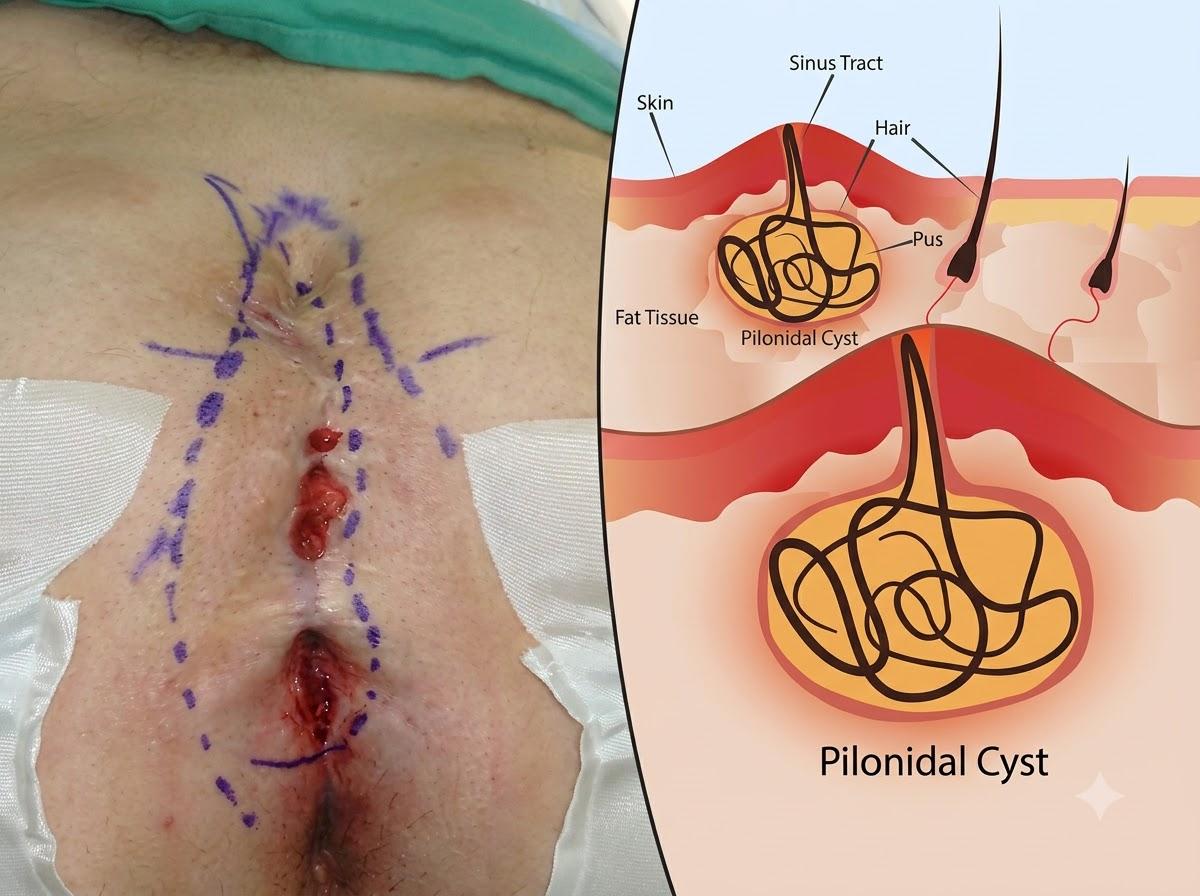
Pilonidal sinus is a condition that develops near the tailbone, usually at the upper end of the buttock crease. It can cause pain, swelling, redness and repeated discharge of pus or blood. Sitting for long periods, friction and infection may make the problem more uncomfortable. Although some people initially ignore these symptoms, an untreated pilonidal sinus can develop into a recurring problem.
Many patients look for treatment options that do not involve extensive surgery or large wounds. An Ayurvedic approach to pilonidal sinus care may include KsharSutra therapy, a traditional medicated-thread procedure used at AyurvedSutram under the guidance of Dr. Raghubansh Singh.
But how does this therapy work? How is the medicated thread used, and what should patients expect during recovery? Let's understand the procedure step by step.
What Is Pilonidal Sinus and Why Does It Develop?
A pilonidal sinus is a small tunnel or tract that forms under the skin near the tailbone. It commonly develops when loose hair enters the skin and triggers an inflammatory reaction. The trapped hair, skin debris and bacteria can contribute to infection and abscess formation.
Some common signs include:
-
Pain or tenderness near the tailbone.
-
Swelling or a small lump between the buttocks.
-
Pus or blood coming from a small opening.
-
Redness and irritation around the affected area.
-
Discomfort while sitting or walking.
-
Repeated episodes of infection and discharge.
The condition may start with a small opening but can develop into a deeper or branching tract. Therefore, proper examination is important before deciding on treatment.
What Is KsharSutra Therapy for Pilonidal Sinus?
KsharSutra is a traditional Ayurvedic treatment technique that uses a specially prepared medicated thread. The thread contains herbal and alkaline preparations and is used to manage certain sinus tracts.
At AyurvedSutram, this approach is used as part of the treatment plan for pilonidal sinus. The purpose is to manage the affected tract gradually while supporting the healing of surrounding tissues.
Unlike procedures that involve removing a large area of skin, KsharSutra follows a thread-based approach. However, its suitability depends on the location, depth, infection and overall condition of the sinus.
How Does KsharSutra Therapy Work for Pilonidal Sinus?
The procedure involves careful examination and placement of a medicated thread in the affected sinus tract. Its working can be understood through the following stages.
1. Examination of the Sinus Tract
Before starting treatment, the doctor examines the affected area to understand the number of openings, depth of the tract and extent of infection.
This step is important because every pilonidal sinus is different. Some patients have a small, uncomplicated tract, while others may have multiple openings or recurrent infection.
Based on the findings, the doctor decides whether KsharSutra is an appropriate treatment option.
2. Preparation of the Medicated Thread
A specially prepared thread is used for the procedure. It contains medicinal preparations that are applied in a controlled manner.
The thread is selected and prepared according to the treatment protocol. Its purpose is to help manage the sinus tract gradually rather than treating only the visible opening.
3. Placement of the KsharSutra Thread
Once the treatment plan is finalised, the medicated thread is carefully placed through the identified tract using an appropriate clinical technique.
The procedure is performed under medical supervision. Local anaesthesia may be used depending on the patient's condition and the doctor's assessment.
Correct placement is important because the thread needs to follow the affected tract without unnecessarily damaging surrounding healthy tissue.
4. Gradual Management of the Affected Tract
After placement, the medicated thread acts on the tract over time. Its action is intended to support gradual tract management and the development of healthy healing tissue.
Unlike a treatment that depends only on closing the external opening, the procedure focuses on managing the affected tract itself.
The thread may need to be changed periodically according to the doctor's instructions. The frequency depends on the treatment plan and the patient's response.
5. Follow-Up and Healing
Regular follow-up is an important part of the treatment. During these visits, the doctor checks the condition of the tract, discharge, surrounding skin and healing progress.
Treatment continues according to the clinical response. Patients should not attempt to adjust or remove the thread themselves.
What Are the Possible Benefits of KsharSutra Therapy?
For appropriately selected patients, this treatment approach may offer certain advantages:
-
Minimally invasive approach: It uses a medicated thread rather than relying on extensive tissue removal.
-
Gradual tract management: The treatment focuses on the affected sinus tract.
-
Limited wound-related intervention: It may avoid the need for a large open wound in suitable cases.
-
Planned follow-up: Regular examinations allow the doctor to monitor healing.
-
Individualised care: The treatment plan can be adjusted according to the patient's condition.
It is important to understand that these benefits are not guaranteed for every patient. Recurrence, infection, discomfort and delayed healing are possible, and treatment outcomes vary.
How Long Does Recovery Take After KsharSutra Therapy?
Recovery time depends on the size and depth of the sinus, infection severity and the body's healing response.
At AyurvedSutram, the website describes a typical treatment period of approximately 4–6 weeks, although some patients may need more time depending on their condition.
During recovery, patients should:
-
Keep the affected area clean and dry.
-
Follow the doctor's wound-care instructions.
-
Avoid prolonged sitting when it causes pressure or discomfort.
-
Wear comfortable clothing to reduce friction.
-
Attend scheduled follow-up appointments.
-
Report increasing pain, fever, swelling or excessive discharge promptly.
Good hygiene and appropriate aftercare help support the healing process.
Who May Be Suitable for KsharSutra Therapy?
KsharSutra may be considered for selected patients with pilonidal sinus after proper clinical evaluation.
It may be worth discussing with a specialist if you have:
-
A recurring sinus with repeated discharge.
-
A persistent tract near the tailbone.
-
Symptoms returning after previous treatment.
-
A condition where a less extensive treatment approach is being considered.
However, an acute painful abscess may require prompt drainage, and KsharSutra is not suitable for every case. A doctor should evaluate the condition before recommending a procedure.
Why Consult an Experienced Doctor for Pilonidal Sinus?
Choosing the right treatment requires more than identifying the visible opening. The doctor must understand the extent of the sinus, associated infection and possibility of recurrence.
Patients looking for a specialist clinic for pilonidal sinus in Delhi should consider the doctor's experience, diagnostic approach, treatment options and follow-up arrangements.
At AyurvedSutram, Dr. Raghubansh Singh provides Ayurvedic care using KsharSutra therapy along with individualised medicines and lifestyle guidance. The clinic is located in Indirapuram, Ghaziabad, and serves patients from Delhi NCR.
If you are searching for an experienced pilonidal sinus doctor in Delhi, a detailed consultation can help you understand whether this treatment approach is suitable for your condition.
Frequently Asked Questions
1. Is KsharSutra therapy painful for pilonidal sinus?
The level of discomfort varies from patient to patient. Local anaesthesia may be used during the procedure, and some discomfort can occur during treatment and thread changes.
2. Can pilonidal sinus return after KsharSutra therapy?
Yes, recurrence is possible. Proper treatment, follow-up care and preventive measures can help reduce the risk, but no treatment can guarantee that the condition will never return.
3. How often does the KsharSutra thread need to be changed?
Thread changes are scheduled according to the treatment protocol and healing progress. The treating doctor decides the appropriate frequency.
4. Can recurrent pilonidal sinus be treated with KsharSutra?
Some recurrent cases may be considered for this treatment. However, the doctor must first examine the tract and determine whether the procedure is appropriate.
5. Where can I get pilonidal sinus care in Delhi NCR?
Patients looking for pilonidal sinus care in Delhi can consult AyurvedSutram in Indirapuram, Ghaziabad, for an assessment by Dr. Raghubansh Singh and guidance about available treatment options.
Conclusion
Pilonidal sinus can affect everyday activities because of recurring pain, swelling and discharge. Understanding the available treatment options can help patients make informed decisions instead of ignoring symptoms or relying on temporary relief.
KsharSutra therapy uses a medicated thread to manage the affected sinus tract gradually. However, the right treatment depends on the patient's condition, and proper diagnosis and follow-up remain essential.
At AyurvedSutram, Dr. Raghubansh Singh provides individualised Ayurvedic care for pilonidal sinus using KsharSutra therapy. If you are experiencing recurring symptoms, consider consulting a qualified doctor to understand the treatment options suitable for you.


